Tuesday, November 14, 2017

"Si Vous Moi Voudrez Ame (If You'd Only Love Me)" - Leo Soileau

Leo Soileau was one of the first Cajuns to incorporate elements of commercial country music into Cajun music.2  Formed in 1934, Leo Soileau's Three Aces--although there were never less than four musicians--soon shot to the forefront of this embryo "Cajun country" movement.  Apart from the Cajun tradition, their major inspiration came from western swing, a cheerful, spirited amalgam of swing, blues, ragtime, and fiddle music that originated in Texas.1  

Tu m’as dit, jolie fille, tu p’us, mais chère,

Tu pouvais pas p’us m’aimer, chère,

Pourquoi donc, mais tu fais ça à ton vieux neg, chérie?

Tu vas me faire (mourir??), jolie.

Tu m’as dit jolie fille, tu pouvais p’us m’aimer,
Toi, maman, quoi faire t’as fait ça, chérie?

Tu m’as dit, jolie fille, pourquoi-donc, chérie,
Tu fais ça avec ton neg, chérie,
Tu m’as dit, joli cœur, que tu peux p’us m’aimer, chère.

Ohh, toi, ‘tit monde, jolie fille, criminelle,
Haa, toi ‘tite fille, ohhh, bébé.
Rayne Tribune
Dec 10, 1937

He learned to play fiddle from his father at around the age of 12 and was inspired by other local Cajun musicians such as Dennis McGee.3   
I'd steal his fiddle from under the bed and when I'd break a string, I'd get a whipping.  That's for sure!3

In early 1935, Soileau's string band, without an accordionist, but with the first drummer to play on Cajun sessions, made popular recordings such as "Si Vous Moi Voudrez Ame (If You'd Only Love Me)" (#4880 & #2194) which Bluebird co-issued on Montgomery Ward's label.  His Three Aces were composed of Floyd Shreve on guitar, Bill (Dewey) Landry on guitar, and Tony Gonzales on drums.  The smooth, rhythmic music was in sharp contrast to the raw folk sound of Joseph Falcon's performances.   However, "Voudrez" was eclipsed by the more popular tune on the flipside, "Le Gran Mamou". 


You told me, pretty girl, you could, well dear,

You couldn't love me anymore, dear,

Why then, well, did you do that to your old man, darling?

You are going to make me an old man, dear.

You told me pretty girl, you could love me,
You, little momma, why did you do that, darling?

You told me, pretty girl, why so, darling?
You did that to your man, darling,
You tole me, pretty sweetheart, that you could love me, dear.

Oh, you little everything, pretty girl, it's terrible,
Ha, you little girl, oh baby.
Leo Soileau and the Three Aces
Floyd Shreve, Tony Gonzales, 
Leo Soileau, and Dewey Landry

By  late 1935, he renamed his band to the Four Aces and signed with Decca, which had already signed Joseph Falcon and Amade Ardoin.  Working with a completely different company, many unaware of his previous recordings, he used the opportunity with Deccas to re-record the song in 1937.   His swinging tune became more well known as "La Blues de Port Arthur".  


  1. South to Louisiana: The Music of the Cajun Bayous By John Broven
  2. The Encyclopedia of Country Music
  3. http://arhoolie.org/leo-soileau-interview/
  4. Lyrics by Jordy A
Find:
Raise Your Window: A Cajun Music Anthology 1928 - 1941 (The Historic Victor-Bluebird Sessions Vol. 2) (CMF, 1993)
Cajun Early Recordings (JSP, 2004)

Wednesday, November 8, 2017

"Pauvre Hobo" - Hackberry Ramblers

The Hackberry Ramblers had sustained a successful Cajun music career between 1935 and 1939.  In 1940, they disbanded when some musicians were drafted for World War II. Fiddle player, Luderin Darbone, reorganized; bringing back Edwin Duhon and adding Eddie Shuler.  During that time, the group was looking for a steady place to play.   A year after World War II ended in 1945, Leo Soileau moved from the Silver Star Club in Lake Charles to begin a regular stand at the Showboat in Orange, Texas. The Hackberry Ramblers replaced him and played every Saturday night at the Silver Star for 10 years.  In addition, the band added Chink Widcamp on bass.

Fais pitie t'voir, mais, comme un pauvre hobo,

(Plus) de soulier, (plus) d’argent, mais, ça sa fait pitie,


Eh, catin.


J'ai parti pour Texas, mais, comme un pauvre enfant,
Par rapporte à la belle, mais, si moi, j'suis comme ça, chere.

Oui, oui.


Lake Charles American Press
Jul 11, 1947

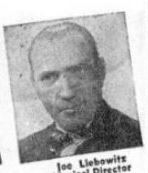
They were always traveling, like poor hobos.  In one instance, they quickly raced to a recording session to lay down several tunes, including an old Breaux Brother's recording called "Les Tracas Du Hobo Blues".  In a way, the song exhibited the bands essence.  In 1947, Luderin was contacted by Joseph Leibowitz of Deluxe records where they were requested to record over two hours away in New Orleans.  Luderin Darbone recalls the DeLuxe encounter:
One day I was at work, and I got a long distance call from St. Louis, Missouri. It was this fellow with the DeLuxe. He wanted to know if he could come down and listen to us play. I said "Sure". I told him where we were playing. Sure enough, that next night before we started the dance, I went into Lake Charles at the Majestic Hotel, that's where we were to meet.1  
He was in Linden, New Jersey.  He called me and said for me to be in New Orleans on Sunday with the band. We played the dance Friday night. I worked Saturday. We played Saturday night. We left after the dance, went to New Orleans. We didn't sleep.  We started recording about 2:30. We recorded to 11:30 that night. We left and had to be back to go to work the next morning. I slept 30 minutes in all that time. I don't know if I could still do that.1 


You're pitiful to look at, well, like a poor hobo,

No more shoes, no more money, well, that's pitiful. 


Eh, little doll.


I have left for Texas, well, like a poor child,
(It's) because of the pretty girl, well, if I'm like that, dear.

Yeh, yeh. 


Edwin Duhon and Luderin Darbone
During this session, the group recorded the song which Harry Choates had just popularized for Gold Star records that year, called "Pauvre Hobo" (#5037).  Sung by guitarist Lennis Sonnier, he was backed by Luderin's fiddle, Grover Heard's lead guitar, and Lefty Boggs' drums.  Many of these recordings were co-released on their 6000 series.   DeLuxe hadn't prepared for this field recording. The recording levels were too low. Since they were in discussions with plans to be merged with King records, little was done to market or give much consideration to the recording.  Darbone wrote a letter, complaining it wasn't near the sound compared to Harry Choates, but to no avail.1 


  1. http://arhoolie.org/hackberry-ramblers/
  2. "Hackberry Ramblers Making music since 1933". DON KINGERY. American Press, Friday, September 24, 2004
  3. Lyrics by Stephane F and Jordy A

Saturday, November 4, 2017

"Sulphur Breakdown" - Charlie Broussard

Charles Broussard was born into the Nicholas Broussard family of fiddlers who played in the mid-1800s around the town of Creole, Louisiana. He learned to play on a homemade fiddle in his youth, eventually playing house parties and house dances as well as dancehalls with his brothers, Albert and Theo Young.1

By the late 1940s, Charles Broussard started playing a more western swing and country style of music and formed the Sulphur Playboys, recording "Soldier’s  Waltz" and "Sulphur Breakdown" with French lyrics on the Houston-based Opera label. His son, Carrol learned the steel guitar and played and recorded with Harry Choates, Jimmy C. Newman, Abe Manuel, Robert Bertrand, and Rufus Thibodeaux.1
Baytown Sun
June 30, 1951


C'est les filles de la campagne,
J'connais qu'est si mechante,
C'est les blondes du village,
Qui depensent tout mon argent.

Travailler tout la s'maine,
Pour Faire l'argent pour samedi au soir,
Dimanche matin je serai malade,
Y a personne oui qui veut d'moi.

C'est la fille a Nonc Edouard,
Qui mangeait du Gumbo Toloche,
C'est les filles a tee Tante Rosa,
Qui veut rester au bal chez Joe.

Cinquante sous dans ma poche,
Et la bouteille dans ma main,
Ma tit fille m'a dit hier encore,
Voudra s'marier, la s'maine qui vient.
Charles Broussard

In 1947, Bennie Hess, bandleader of the Oklahoma Tornadoes got together with Bill Quinn of Gold Star records in Houston and created their own label called Opera records.   It was originally created to push Hess' own band material.  But that year, he decided to dabble in recording some Cajun artists.   Charlie, having worked with Hess's fiddle player Floyd, was an obvious choice to have round out his Cajun pressings.  His song "Sulphur Breakdown" (#109) was an ode to the small town of Sulpher, Louisiana, not far from where he grew up.   He was backed by Billy Christian on guitar, Carrol Broussard on steel guitar, and C. J. Broussard on drums.

It's the girls of the countryside,

I know which are so michievous,

It's the blondes of the village, 
Who spend all of my money.

Working always,
To make money for Saturday night,
Sunday morning, I will be depressed,
There is no one who wants me.

It's the daughter of Uncle Edouard,
Who ate the gumbo,
It's the girls of Tee Aunt Rosa,
Who want to stay at Joe's place.

Fifty cents in my pocket,
And a bottle in my hand,
My little girl told me again yesterday,
Would like to get married, the hand which I'd take. 


Carrol Broussard, Billy Christian,
Charles Broussard, C. J. Broussard,
Homer Goodrich, Jack Granger
1947
Courtesy of Cajun Dancehall Heyday1


  1. Cajun Dancehall Heyday by Ron Yule

Friday, November 3, 2017

"Cajun Records: 1946-1989" by Nick Leigh

I'm excited to announce that Nick Leigh and I (and countless other volunteers and authors) have completed one of the most momentous and challenging projects conceived regarding Cajun music recordings. The second edition of "Cajun Records 1946-1989" is released. For the first time, we've helped Nick highlight and document the post-war recording era of Cajun music. It features details on almost every commercial Cajun recording between 1946 and 1989. It includes all the 78 RPM recordings of the Cajun Dancehall Era. It also contains information on almost every 45 RPM recording during the Cajun Renaissance Era until 1989. Considered a project which has been way overdue, it's a must-have document for any Cajun music record collector and for any student of Cajun music history. Be sure to visit the Rhythm and Blues Magazine website and download a PDF copy now.

Tuesday, October 31, 2017

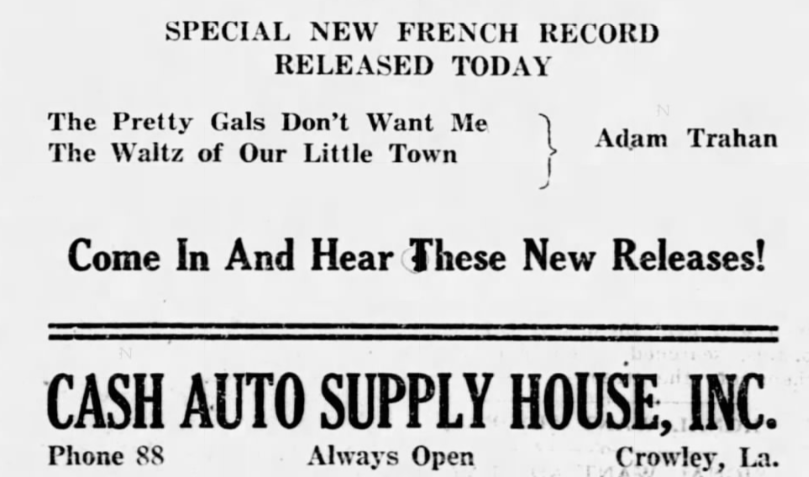
"The Pretty Gals Don't Want Me" - Adam Trahan

By the summer of 1928, it had become quite apparent to Columbia's record company executives that an intriguing development was taking place.  Their new experiment with Cajun music was proving to be an unexpected success.  The bayou and prairie country of Cajun Louisiana, almost totally ignored by record companies up to this point, had overnight become a potential hotbed for record sales.1
Toutes les belles filles veut donc pas de moi,
"T’as des vilains manière" dit pop,
"Toutes les filles veut pas te marier,
Tu va te prendre une délaissé",
Toutes les belles filles veut donc pas de moi,
Rapport que je suis un bambocheur,
T’as parti le but que moi j’aime tant,
Mais, aller avec ton père.

C’est Madame Aubert* que je veux me marier,
C’est la belle que je veux voir,
J’ai bien suit pour l’attraper,
Et parti à pleurer.

Adam Trahan grew up around Abbeville and had learned the accordion before he was eighteen.  Once he had mastered the basics, one of his uncles took him to Rayne where he purchased a Monarch accordion for $22.50.  Inspired by Cajun-area musicians such as Joe Falcon, he kept practicing until, in his own words:
I got to be pretty good. I learned the accordion by myself--on my own--no one ever really taught me how to play it.1
After entering an accordion contest in Acadia parish, his name became known among other Columbia Cajun musicians.   While still single, living at home, Trahan received a telegram from F. Mackey, a Columbia Record representative.    The telegram directed him to "hop on the next train to New Orleans."1   

Crowley Daily Signal
Apr 18, 1929


All the beautiful girls don't want me,

"You have bad ways", says pop,

"All the girls do not want to get married,

You will have to take a forsaken one."
All the beautiful girls do not want me,
Because I am a rambler.
You've left with purpose, the one I love,
Well, to go with your father.

It's Madame Aubert which I want to marry,
It's the beauty which I want to see,
I have followed to catch her,
And went away crying.
With no time to lose, Adam went first to the Gueydan rice mill where Obrey Clark and Otise Monceau worked, only to find that his two fellow bandmembers employed there were unable to take off work.   The owner of a shoe shop in Kaplan suggested his guitar playing brother, Edney Broussard, who was willing to travel to New Orleans.   There he recorded "The Pretty Gals Don't Want Me" (#40501), a melody loosely borrowed from an old children's tune, "The Rabbit Stole The Pumpkin".   It was an intense fast-paced song that demonstrates Trahan's expertise on the accordion.   Unfortunately, Broussard's guitar chords on the recording are out of musical phase with Trahan's accordion much of the time.1


  1. Accordions, Fiddles, Two-Step & Swing: A Cajun Music Reader by by Ryan A. Brasseaux (Editor), Kevin S. Fontenot  (Editor), Wayne W. Daniel (Foreword).  Interview by Ron Brown. 
  2. Lyrics by Jordy A
Find:
Cajun: Rare & Authentic (JSP, 2008)

Friday, October 27, 2017

"La Valse Kim Fe Du Mal (The Waltz That Hurts Me So)" - Lawrence Walker

"Valse Qui M'Fait Du Mal".  Lawrence Walker was both near Duson, Louisiana who joined his father Allen and his brother Joseph Elton to record traditional fiddle tunes between 1928 and 1932 as the Walker Brothers Band. By mid-1930s, young Lawrence has learned to play the accordion. While other accordion bands were beginning to give way to more popular string bands, Lawrence continued to perform and record, adapting his music to include popular American tunes.

Oh, 'tit monde, moi je me tarde de me voir,

M'en aller z'à la maison, y a p(l)us personne pour me recevoir,

Hé Jolie, tu connais j'prends ça dur, 

Petite, prends ça dur, cher 'tit coeur, j'peux p'us pleurer.

Oh, 'tit monde, comment j'vas faire z'ave(c) ça, 
Petite, tu connais, moi j'veux plus t'oublier, 
Oh, 'tit monde, j'ai que(l)que chose pour te dire, 
Petite, tu connais, ça fait du mal juste à jongler. 
Crowley Daily Signal
June 3, 1950

Even the Walker accordion finally succumbed to the flood of string bands during the late 1930s and early 40s. He returned, however, along with Nathan Abshire, Austin Pitre, and others, after World War II to take his place in the Cajun music revival. In the 1950s, Walker became an immensely popular band leader, bringing outstanding musicians like Dick Richard, Ulysse Joseph "U.J" Meaux, and Lionel Leleux into his Wandering Aces band. Together, with Mitch David on fiddle (and possibly vocals), possibly Valmont "Junior" Benoit on steel guitar, and either Simon Shexnaider or Lawrence Trahan on drums,in 1950, the young group recorded "La Valse Kim Fe Du Mal (The Waltz That Hurts Me So)" with George Khoury on his new label. (#606). His smooth accordion style and original compositions in traditional and contemporary styles made Walker a favorite among dancers throughout South Louisiana and into the Golden Triangle of Southeast Texas.  

Oh, my little everything, I long to see,

Myself going home, there is no one to greet me,

Hey Jolie, you know I take this hard,

Little one, I take it hard, dear little sweetheart, I can't cry anymore.

Oh, my little everything, how will I deal with that?
Little one, you know, I don't want to forget you anymore,
Oh, my little everything, I have something to tell you,
Little one, you know, that makes me feel bad just thinking about it.

His many fans invariably describe him as perhaps the best accordion player and singer in Cajun music. Yet, his popularity seems to have remained in the dance halls and in the memory of the crowds who were lucky enough to have heard him perform.


  1. http://www.flattownmusic.com/Lawrence-Walker.aspx.  Brief History by Dr. Barry Ancelet
  2. Lyrics by Stephane F and Bryan L

Find:
A Legend At Last (Swallow, 1983)

Monday, October 23, 2017

"Poor Hobo" - Harry Choates

Cajun swing fiddler Harry Choates' memory is lived in legendary tales of his life.  Never content to staying in one place or settling down with his family, he truly led the life of a vagabond.   He never owned a fiddle, allegedly; borrowing them as he needed to make enough money for drinking.  Money was never around and found refuge wherever he could in between paying gigs.

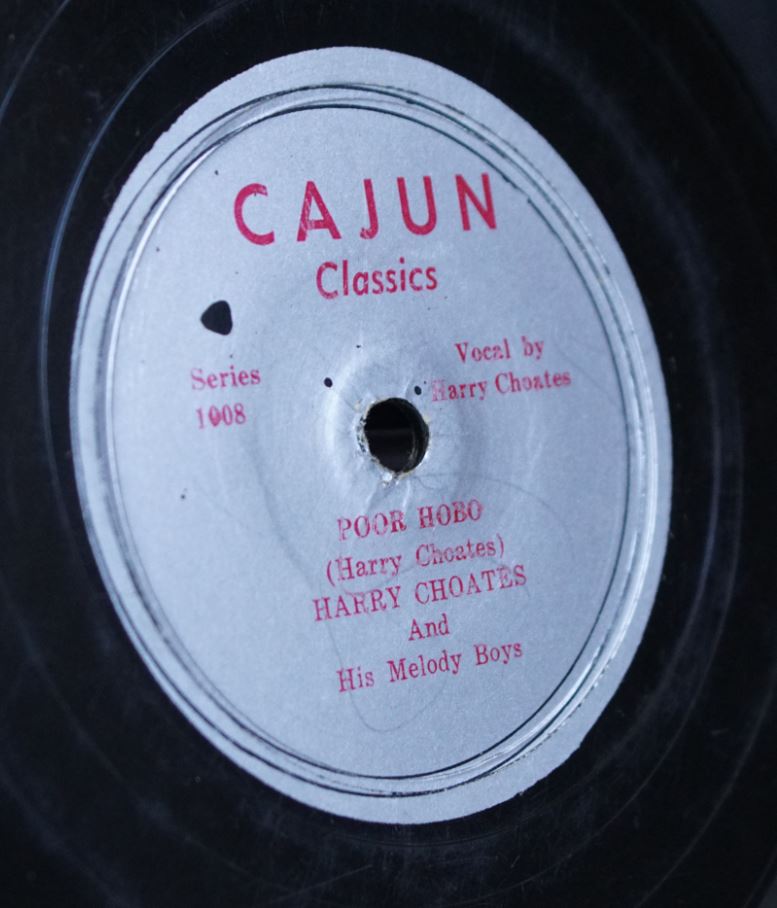
"Poor Hobo" was recorded twice by Harry.  Once for Mercer's Cajun Classics in early 1947 (#1008) and then again for Bill Quinn's Gold Star label in late 1947 (#1336).  The song is based on the Breaux brother's classic "Les Tracas Du Hobo Blues" recorded for Columbia back in 1929.   Harry's drummer, Curzy "Pork Chop" Roy remembers the recording session:
I remember those because Quinn who was a tough customer had us do several retakes on those songs.  We didn't receive any money for this.  Harry received a check.3


Hé Ha Ha.


Oh, je peux me voir, mais, comme un pauvre hobo,

Pas personne qui me veux pas, mais, ça m’a fait pitié.

Hé, malheureuse, quoi faire tu fais comme ça,

Oh, je connais, c'est par rapport à la mienne.


Oh, petite, pour moi tu fais comme ça,

Quoi t'a fait, mais, moi, je connais sera pas longtemps,

Mais, moi, j'connais chérie, hé hé hé,

Oh chère, je vas t'emmener un jour, chérie.

Rio Vista Club, Bandera, 1950
Frank Lamanski, Phil Marx, Harry Choates,
Louis Oltremari, Ivy Gaspard, Junior Keelan
 

It was a tune his most likely picked up while playing with Leo Soileau in the late 1930s, known as "Chere Liza".  His session at Goldstar was backed up by Wilbur "Pee Wee" Maples on guitar, Pee Wee Lyons on steel guitar, Grady Mann on bass, and Johnnie Ruth Manuel on piano.  Although author Tim Knight lists Amos Comeaux as the drummer, Curzy specifically remembers playing the drums on this recording session.  Apparently, after the band finished recording, Quinn took them all to a Mexican restaurant.  Curzy recalls:
We got paid in hot tamales.3


Oh, I can see that, well, I'm like a poor hobo,

Not a single person that does not want me, well, that makes me sad,

Hey, it's terrible, why are you doing this like that,

Oh, I know, it's because of how I look (feel).


Oh, little one, you've done this to me like that,

What you have done, well, I know it won't be long,

Well, I know, dear, hey, hey, hey,

Oh dear, I'm going to take you away one day, dear.

Later 45 releases by Starday and D Records (ST212 and D1043) mis-titled Harry's "Louisiana" as "Poor Hobo".  Author Tim Knight would use this title of this song for his biography on Harry Choates; a fitting description of what his life was like.  Success and stability were never important to him.  He had a naive innocence about himself, and said he was only interested in making people happy. According to Harry's daughter, Linda:

“My daddy just loved people with an almost childlike trust.”1


Poor Hobo - Early 1947 - Cajun Classics


Poor Hobo - Late 1947 - Goldstar


  1. http://therecordlive.com/2009/12/16/harry-choate-and-jolie-blon-cajun-musics-founding-father/ 
  2. Image by Tim Knight
  3. Poor Hobo: The Tragic Life of Harry Choates, a Cajun Legend by Tim Knight
  4. Lyrics by Stephane F and Jordy A
Release Info:
Louisianna | Gold Star 1336-A
Poor Hobo | Gold Star 1336-B

Louisianna | Modern 20-595
Poor Hobo | Modern 20-595

Poor Hobo | Cajun Classics Series 1008
Jole Brun | Cajun Classics Series 1009

Poor Hobo | Starday 212
Opelousas Waltz | Starday 212


Find:
Harry Choates ‎– The Fiddle King Of Cajun Swing (Arhoolie, 1982, 1993)
Cajun Fiddle King (AIM, 1999)