Showing posts with label Lennis Sonnier. Show all posts

Monday, March 8, 2021

"Lafayette" - Hackberry Ramblers

The biggest Cajun cover band in the 1930s was the Hackberry Ramblers.  Their pre-war career stretched from 1935 to 1938 covering some of the most iconic songs of the Cajun prairies until RCA's recording activity in south Louisiana began to diminish.  By 1940s, the group had disbanded but reformed again under Luderin's leadership in 1946.  

Luderin's string band contemporary, Harry Choates, had just scored a huge hit with "Jole Blon".   Riding on the popular post-war recording wave, Luderin was contacted by DeLuxe records the following year where his group re-recorded their version of the song "Jole Blon".   During that same New Orleans session, they recorded several Cajun classics, including the original Cajun classic by Joe Falcon called "Lafayette" (#5031). 

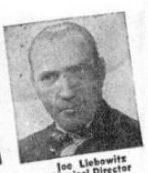
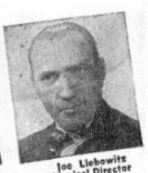
The DeLuxe Record Company was formed in 1944 by David and Jules Braun in Linden, New Jersey. A subsidiary of King Records, the label recorded popular music, rhythm and blues, jazz, gospel and country & western.2   In 1947, Luderin was contacted by their manager, Joseph Leibowitz.   Luderin Darbone recalls the DeLuxe encounter:

He came out and listened to us. He like the way we played, so he said he would record us. He wanted us to go to New Orleans one weekend.1 

Allons à Lafayette, c'est pour changer ton nom,
On va t’appeler Madame, Madame Canaille Comeaux,
Petite, t’es trop mignonne pour faire ta criminelle,
Comment tu crois que moi j'peux faire, mais, mon tout seul.

Eh, malheureux, aller avec un autre,
Comment m'j'va faire, seul a la maison,
Mais toi, mon petit coeur, 'garde, quoi t’as fait,
...

Luderin Darbone4

This time, the band added Chink Widcamp on bass, Edwin Duhon on accordion, Gary Major on tenor sax, Neil Roberts on trumpet, Grover Heard on guitar, Lennis Sonnier on vocals and guitar, and Lefty Boggs on drums.  The group was performing three nights a week in clubs around Lake Charles, frequently catering to soldiers from the Camp Claiborne station.3 

In 1947, Syd Nathan purchased a majority interest in the DeLuxe label, although it continued to be operated out of Linden by the Braun brothers until March, 1949, when the offices were moved to Cincinnati.2  It's believed that "Lafayette" was pressed during this turbulent time, and unfortunately, the copies produced suffered from dynamic range.  By 1951, the label was acquired by King Records.  


Let's go to Lafayette, in order to change your name,
We'll call you Mrs., Mrs. Canaille Comeaux,
Little one, you are too cute to be this bad,
How do you think that I'll handle this, well, all alone?

Hey, oh my, going away with another,
How am I going to handle this, alone at the house,
Well you, my little sweetheart, look at what you've done,
...


  1. http://arhoolie.org/hackberry-ramblers/
  2. https://www.discogs.com/label/51018-DeLuxe-2?page=3
  3. Cajun Breakdown: The Emergence of an American-Made Music By Ryan Andre Brasseaux
  4. National Endowment for the Arts
Release Info:
D 343 Lafayette | DeLuxe 5031 A
D 342 Crowley Waltz | DeLuxe 5031 B

Friday, July 31, 2020

"Darbone's Creole Stomp" - Hackberry Ramblers

The Hackberry Ramblers were one of the first Cajun string bands in the rnid-1930s to imitate the swing sounds from Texas (such as Bob Wills, Milton Brown and the Light Crust Doughboys), but they also played the latest jazz tunes of the time, such as "High Society", re-titled after a local town, called "Vinton's High Society", and "Careless Love". The Hackberry Ramblers were one of the first Cajun groups to use amplification in dance halls and they were the first band to record a string band arrangement of "Jolie Blonde" that is still heard today.1 

Radio waves emanating from Texas, Shreveport, and New Orleans ignored south Louisiana's cultural boundaries as they crisscrossed Cajun Country and spilled Western swing, hillbilly music, and jazz across the region.2  Influenced by music across the boarder, the original members got their big break when they were invited to play on the radio. Darbonne stated:
There were no radio stations in southwest Louisiana.  Not until the Lafayette's KVOL and Lake Charles KPLC came on air in 1935.2 

(top) Lennis Sonnier, Claude "Pete" Duhon,
(bottom) Luderin Darbonne, possibly Floyd Shreve
By 1937, several members changed out and landed in New Orleans recording for RCA's Bluebird Records at the St. Charles Hotel.   There, they recorded a rendition of the 1929 Harrington, Landry & Stewart instrumental "La Stomp Creole", re-titled as "Darbone's Creole Stomp"  (#2025).  Along with "Darbone's Breakdown", this is one of two songs which were odes to the band's founder, Luderin Darbone.  The recording featured Darbone on fiddle, Lennis Sonnier and Floyd Shreve on guitars, and Claude "Pete" Duhon on bass.  After the war, musicians such as Nathan Abshire re-titled the melody again as the "Hathaway Two Step". 


  1. J'ai Ete Au Bal Vol. 1.  ARhoolie CD 331.  Liner notes.
  2. Cajun Breakdown: The Emergence of an American-Made Music By Ryan Andre Brasseaux
Release Info:
BS 14004-1 Church Point Breakdown | Bluebird B-2025-A
BS 14003-1 Darbone's Creole Stomp | Bluebird B-2025-B

Find:
Cajun Country, Vol. 2, More Hits from the Swamp (JSP, 2005)
Cajun Capers: Cajun Music 1928-1954 (Proper, 2005)

Monday, April 20, 2020

"Quitter La Maison (Leaving Home Blues)" - Hackberry Ramblers

In 1933, when Luderin Darbone was 19, he joined Edwin Duhon to form a two-member band and named it the Hackberry Ramblers.  However, There was a change even before the band got its first job.  Duhon, accomplished on both the accordion and guitar, had planned to play the accordion to accompany Darbone’s fiddle. But the accordion was battered and wheezy. A new one would cost $20 — more than either young man had.1  By the time the Ramblers were hitting their stride and Eli Oberstein contacted them to record, the accordion was no longer the popular instrument in Cajun bands. 


Et là, heir au soir,

Mais, t'as été dans l'amour,
Elle m'avait dit elle voulait pas m'voir,
Mais ça, ça m'fait du mal.

J'ai quitté la maison,
Pour m'en aller dans le Texas,
J'ai quitté ma vieille mère,
Parce que mon cœur était cassé,
Eh, chère.

J'aimerais être avec toi,
Mais, je connais tu veux pas m'voir,
Je vas rester à Houston,
Parce que je connais tu me veux.
By 1935, according to Luderin, "no band had an accordion". Duhon put down his ailing instrument and picked up his guitar.  However, Darbone and Duhon did have a radio. They tuned to every station they could find that played country and western music. The Hackberry Ramblers started with a fiddle and guitar.1 


(top) Lennis Sonnier, Claude "Pete" Duhon,
(bottom) Luderin Darbonne, possibly Floyd Shreve
Luderin Darbone recalls the first recordings:
The first accordion record was released about in 28 or 29. At this period, when we moved to Crowley, it was about 1935. Then RCA Victor got this fellow, Leo Soileau, to come in and make some of these Acadian records and they went over pretty big. Then the next time they came down, or before they came down, I wrote to them and told them that we could play that type music too.  Then we started practicing up on these.2 
By 1937, the group consisted of Lennis Sonnier on vocals and guitar, Floyd Shreve on guitar, Claude "Pete" Duhon on bass and Luderin Darbonne on fiddle.  At the St. Charles Hotel in New Orleans, the ensemble recorded "Quitter La Maison" (#2021).  


And there, last night, 

Well, you were in love,
She told me she didn't want to see me,
Well that, that's terrible.

I left home,
To go away to Texas,
I went to my old mother's place,
Because my heart was broken,
Oh, dear.

I'd like to be with you,
But I know you don't want to see me,
I'm going to stay in Houston,
Because I know you want me to.


  1. "Hackberry Ramblers Making music since 1933". DON KINGERY. American Press, Friday, September 24, 2004
  2. http://arhoolie.org/hackberry-ramblers/
  3. Lyrics by Stephane F

Release Info:
BS 14000-1 Quitter La Maison (Leaving Home Blues) | Bluebird B-2021-A
BS 14007-1 Pas Aller Vite (Step It Fast) | Bluebird B-2021-B

Find:
Louisiana Cajun Music Vol. 3: The String Bands Of The 1930s (Old Timey/Arhoolie, 1971)
Cajun Early Recordings (JSP, 2004)

Tuesday, November 5, 2019

"Silver Star Stomp" - Hackberry Ramblers

By the late 1940s the Hackberry Ramblers had evolved from a small string band into a large western swing ensemble, complete with a horn section. Edwin Duhon now played acoustic bass, piano, or accordion, as the moment demanded, all the while working in the oilfields. The group made some fine recordings with this configuration for the Deluxe label.1  Deluxe had recorded the group at a club across the street from the Silver Star dance hall in Sulphur, Louisiana one night after performing.  Luderin Darbone played fiddle and sang while Lennis Sonnier backed him up on rhythm guitar.

 Hired in 1946, the Silver Star was a place where the Ramblers often outplayed Cliff Bruner's group during battle-of-the-bands competitions.  Sometimes they'd win dance contests simply by striking up their French version of local favorite "Jole Blon".   Recalling performing opposite a number of popular musicians, including Moon Mullican and T. Texas Tyler, Edwin Duhon stated:


We'd play "Jole Blon".  They'd count how many dancers.  We'd win every time.  Cliff Bruner, same way. We just beat the shit out of him.2,4 


Tu m'as quitté pour t'en aller, pour t'en aller avec un autre,
Audjourd'hui, j'apres me braillier, 
J'apres me braillier, pour t'en venir, t'en venir avec un nègre, 
Audjourd'hui, j'apres me braillier. 


Lake Charles American Press
Sep 17, 1954

Places like the Silver Star dotted Hwy 90 during the 1940s.  The Star's "house band" during the late 1940s, led by guitarist Amos Comeaux, occasionally would broadcast live from the dancehall itself via KWSL.  Accordion to author and historian Nola Mae Ross:
Nearly every square foot along a 35 mile strip from Westlake (Louisiana) to Orange (Texas), called the "Silver Strip", was occupied by a dance hall or casino with back rooms where gambling was enjoyed by thousands of area citizens.5


Hackberry Ramblers, 1948
Lennis Sonnier, Neal Roberts, Lefty Boggs,
Luderin Darbone, Edwin Duhon

In order to compete with the "big band" crazy in the 1940s, the Hackberry Ramblers changed up their lineup in order to land performances in the same venues as big orchestras.  The 1948 tune "Silver Star Stomp" (#6038) is a swinging version of Papa Cairo's "Big Texas" with a brass accompaniment by Gary Major on saxophone and Neil Roberts on trumpet.  Throughout the song, Grover Heard fills in with a rocking guitar solo. The remaining band had Edwin Duhon on bass and Lefty Boggs on drums.  The whole session for DeLuxe was recorded live at a dance-hall across the street from the Silver Star.  According to Luderin:


We started at the Silver Star in 1946 and played until '56.  We built our home with the money from the dances I played. Each brick on our home represents one tune I played, during the 10 years of Saturday nights at the Silver Star on old Highway 90.3,7


You've left me to go away, to go away with another,
Today, I'm crying,
I'm crying, for you've come back, you've come back to your man,
Today, I'm crying. 


Lake Charles American Press
May 20, 1954

By the early 1960s, however, demand for the Ramblers’ sound dwindled, along with general interest in Cajun music. Luderin Darbone considered disbanding the group, but Chris Strachwitz—the guiding force behind Arhoolie Records, who has documented a wealth of Louisiana music—encouraged the Hackberry Ramblers to stay active. Strachwitz recorded the Ramblers in 1963 and also reissued some of their Bluebird classics.1    


According to author and Hackberry Ramblers drummer, Ben Sandmel,
I think "Silver Star Stomp" reflects southwest Louisiana's transition from a totally isolated rural agrarian French-speaking area to a far more industrialized (primarily oil) bilingual region where Cajun culture interacted significantly with mainstream America, in the context of vast changes in communication which made that interaction ever more far-reaching.  Some of the other DeLuxe sides are weak but this one, to my ear, is a gem.  And it really gives a sense of evolving music history.6  


  1. https://www.knowlouisiana.org/entry/hackberry-ramblers/
  2. Crossroads: A Southern Culture Annual By Ted Olson
  3. http://ereserves.mcneese.edu/depts/archive/FTBooks/hackberry.htm
  4. Cajun Breakdown: The Emergence of an American-Made Music By Ryan Andre Brasseaux
  5. Louisana Folklife Journal. Vol 37.  2013.  Ron Yule.
  6. Discussions with Ben S
  7. Cajun Dancehall Heyday by Ron Yule 
  8. Lyrics by Smith S
Release Info:
D 942 Dans Le Grand Bois | Deluxe 6038-A
D 944 Silver Star Stomp | Deluxe 6038-AA

Tuesday, July 30, 2019

"Mermentan Stomp" - Hackberry Ramblers

Starting in 1933, the Hackberry Ramblers played a blend of Cajun music, western swing, Gulf Coast swamp pop, early rock and roll, and classic country. The band was cofounded by fiddler Luderin Darbone and multi-instrumentalist Edwin Duhon, the duo who led the group.  Beyond their remarkably long run, the Hackberry Ramblers are known for several important innovations. They were the first band to combine Cajun music, sung in French, with Anglo-American country music, sung in English; previously the two traditions were separate. Besides country music—especially the jazz-influenced country style known as western swing—the Hackberry Ramblers also played blues, traditional jazz standards, a wide range of miscellaneous popular songs, and novelty material. Whatever the genre, the band’s sole intent was to make people dance.1


Tu m'as quitté à la maison,

Oui, t'en aller, t'en aller,

T'en aller avec un autre,

Mais, ça sa fait pitié.


The Hackberry Ramblers are captured here in full flow giving a good indication of things to come.  Formed by fiddler Luderin Darbon in 1930 and the first Cajun band to use amplification, they favored pop and hillbilly tunes, but could easily knock out a French tune when required such as "Mermentan Stomp" (#2003).2   It was an ode to the small community of Mermentau, located 30 miles east of Hackberry, along the bayou of the same name.   The bayou was a safe haven for smugglers and even pirates along the Gulf.  It was named after an old 18th century Atakapa chief Nementou who sold land to Frenchman in the area.   Recorded for Bluebird records in 1936, the group contained Floyd Rainwater and Lennis Sonnier on guitars with Lennis on vocals, Johnny Puderer on bass, and Luderin Darbone on fiddle.

You have left me headed to your house,

Yeah, you've gone, you've gone,

You've gone away with another,

Well, that makes me pitiful.


  1. https://www.knowlouisiana.org/entry/hackberry-ramblers/
  2. http://www.mustrad.org.uk/reviews/caj_orig.htm
Release Info:
BS 02662-1 Jolie Blonde | Bluebird B-2003-A
BS 02664-1 Mermentan Stomp | Bluebird B-2003-B

Find:
Louisiana Cajun Music Volume 8: The Hackberry Ramblers - Early Recordings 1935-1948 (Old Timey, 1988)
Cajun Origins (Catfish, 2001)
Cajun Early Recordings (JSP, 2004)

Friday, January 25, 2019

"Se Pas Le Pan" - Hackberry Ramblers

Of all the ventures an optimist might dream up during the Great Depression, the most risky would be a two-person dance band named after a tiny community in Cameron Parish and formed at the peak of the hardest times in American history.  Luderin Darbone and Edwin Duhon didn’t think so. In 1933, they formed the Hackberry Ramblers band, with an accordion, a guitar and a fiddle between them.1

When the Darbones moved to Hackberry, the kid next door was Edwin Duhon, a native of Lake Charles whose hobbies were playing an old accordion and a newer guitar. Darbone and Duhon became friends when they started playing music together.1 


C'est pas le peine tu me dis "non",

Faudra toujours tu me dis "ouais",

C'est pas le peine tu me dis "non",
Faudra toujours tu me marries.


KVOL, Lafayette, LA
Joe Werner, unknown, Luderin Darbone,
Robert Escudier, Lennis Sonnier


By 1937, the group had been recording for two years and arrived at the Masonic Temple in New Orleans to record "Se Pas La Pan" (#2017).   The title means "it's no use", spelled in French as "c'est pas la peine".   The group had added members  Lennis Sonnier on guitar and Joe Werner on guitar/harmonica.   Melodies such as this one can be found earlier tunes such as the Fawvor Brother's "La Valse De Creole", the Segura Brother's "A Mosquito Ate Up My Sweetheart", and later songs such as Lawrence Walker's "Tu Le Du Po La Mam" and Nathan Abshire's "La Valse de Holly Beach".  


It's no use for you to tell me "no",

You will always have to tell me "yeah",

It's no use for you to tell me "no",
You will always have to marry me.


  1. "Hackberry Ramblers Making music since 1933". DON KINGERY. American Press, Friday, September 24, 2004
  2. Lyrics by Stephane F
Release Info:
BS 07224-1 Se Pas La Pan (It's No Use) | Bluebird B-2017-A
BS 07224-1 Rice City Stomp | Bluebird B-2017-B

Find:
Cajun String Bands 1930's: Cajun Breakdown (Arhoolie, 1997)

Thursday, November 1, 2018

"Crowley Waltz" - Hackberry Ramblers

When Louisiana musicians Edwin Duhon and Luderin Darbone founded the Hackberry Ramblers, the country was mired in the Great Depression and FDR had just moved into the White House.3 

The son of an oil field worker, Duhon was born in Youngsville. A Cajun, he grew up speaking French. He later recalled that he was forbidden to speak French in school and that whenever he did, he was spanked.3  Edwin Duhon, played both guitar and accordion, though later in his career he focused exclusively on the latter instrument. Luderin Darbone, a fiddler, spent part of his youth in East Texas, where he acquired a taste for country music to complement the Cajun sounds of his native South Louisiana. Duhon and Darbone formed the Hackberry Ramblers in 1933, and the band went on to become one of the most innovative and long-lasting in American popular music.1  According to the group's producer, Ben Sandmel:
Edwin had a really good ear for music.  He could hear a song as it was being played for the first time and jump right in with either playing a really inventive solo or playing a backup part that would fit perfectly. And he could do that with any style of music -- Cajun, country, rockabilly, the blues.3

Lennis Sonnier, 
Edwin Duhon,
Luderin Darbone

www.mastersoftraditionalarts.org

The group became popular playing for dancers in Louisiana and Texas and in 1935 began recording more than 100 tunes on 78-rpm records for RCA’s Bluebird label.1  However, Edwin had left the group before they had a chance to record their first song.   After nine months as a member, however, Duhon got married and left the group to take a job working in the oil fields.3   Darbone recalls:
Since he was married, he had to earn a living.  With the music, we were lucky to make $3 a night apiece.3

Replaced with Floyd and Lonnie Rainwater, the group recorded a tune in which they called  "Crowley Waltz" (#2173), as their first Cajun single in 1935 at the New Orleans' St. Charles Hotel.  Not to be confused with Cleoma Breaux's earlier recording of "La Valse Crowley", she would also take the melody and recorded it the following year as "Ma Valse Favori"; not all that different from their earlier recording of "Poche Town".  Other renditions at the time were Lawrence Walker's 1929 "La Vie Malheureuse" and Happy Fats' 1935 "La Valse De L'Amour".  Crowley was a small town in Louisiana where most of the band members would end up moving, in order to play more often.  
Lake Charles American Press
Mar 28, 1947

Luderin states:
When I moved to Crowley, I had Lennis. He moved down. Lennis is from Vinton, a little town west of here. We decided if we moved to Crowley it would be more of a central location for us so that's what we did.4  


Later in 1947, under Luderin's direction, the group re-recorded the tune for Deluxe Records.  This time, Edwin had rejoined the band and they added Chink Widcamp on bass.

In 1963, the group reworked the tune for Arhoolie Records in a session located in Lake Charles.  Edwin kept on playing with the group until he was 95. Ben Sandmel stated:
Edwin was a tough, tough old guy. He played as recently as November [2006] in Baton Rouge, even though he was playing in a wheelchair and it was difficult for him to go.3


Edwin Duhon2


1935 - Crowley Waltz


  1. http://www.mastersoftraditionalarts.org/artists/76?selected_facets=name_initial_last_exact:L
  2. National Endowment for the Arts
  3. Edwin Duhon, 95; Co-Founded Cajun Band March 19, 2006|Dennis McLellan | Times Staff Writer (http://articles.latimes.com/2006/mar/19/local/me-duhon19)
  4. http://arhoolie.org/hackberry-ramblers/
Find:
Raise Your Window: A Cajun Music Anthology 1928 - 1941 (The Historic Victor-Bluebird Sessions Vol. 2) (CMF, 1993)
Cajun Champs (Arhoolie, 2005)

Tuesday, August 28, 2018

"Cajun Crawl" - Hackberry Ramblers

It was the mid-'30s, a period when the Louisiana music scene was practically under unending assault from the gargantuan state of Texas directly to the west. Western swing was something that had the ear of both musicians and public, and was being broadcast throughout the Bayou State over the radio. Louisiana musicians who became interested in the style gravitated toward membership in a new type of Cajun string band in which the traditional kingpin accordion player was often told to stay at home.2  

Tu m'as pris dans ma maison,
Comme un pauvre orphelin,
Tu m'as promis de me soigner,
Jusqu'a le jour de ma mort,
Et aujourd'hui, t'es après me quitter,
'Près quitter pour t'en aller,
T'en aller avec un autre,
Chère 'tite fille, que de l'amour.
Crowley Daily Signal
Jul 17, 1936

Throughout this period, the Hackberry Ramblers took the lead in promoting this sub-genre of Cajun music.  The group ended up playing throughout the Cajun country side and by 1936, they were featured three times a week on the local radio station KVOL.  The following year, Luderin Darbone and guitarist Lennis Sonnier grabbed Crowley native Joe Werner and headed to New Orleans to record "Cajun Crawl" (#2013)


You took me into your home,
Like a poor orphan,
You promised to look after me,
Until the day that I die,
And today, you are leaving me,
Leaving to go away,
Going away with another,
Dearl little girl, which I love.

The song features Joe's hard driving harmonica playing.   It was his only recording stint with the Ramblers.  Joe would eventually leave the group to form his own series of bands after his hit song "Wondering".  Behind RCA's back, Decca approached Werner to leave RCA.   Quick to get his own act up and running, he pleaded with Darbone to jump to Decca with him.  Luderin turned him down, telling him:
RCA has been real good to us. They call us every time to come to New Orleans to make records...I don't feel like I should leave.1   

KVOL, Lafayette, LA
Joe Werner, unknown, Luderin Darbone, 
Robert Escudier, Lennis Sonnier


  1. Cajun Breakdown: The Emergence of an American-Made Music By Ryan Andre Brasseaux
  2. https://www.allmusic.com/artist/willie-vincent-mn0001716219
  3. Lyrics by Stephane F

Release Info:
BS 07221-1 Cajun Crawl | Bluebird B-2013-A
BS 07226-1 Jai Pres Parley | Bluebird B-2013-B

Find:

Cajun Early Recordings (JSP, 2004)
Cajun Louisiane 1928-1939 (Fremeaux, 2003) Cajun Early Recordings (JSP, 2004)
Les Cajuns Best Of 2002 Les Triomphes De La Country Volume 12 (Habana, 2002)

Wednesday, May 9, 2018

"Hippitiyo" - Hackberry Ramblers

The Hackberry Ramblers had been playing music since 1933 and by 1936, they were the darlings of Bluebird Record producer Eli Oberstein.  But by 1939, the Hackberry Ramblers were having a hard time staying together. Luderin Darbone had quit playing and the recording industry ignored Cajun music.   After the war, Cajun music was hot again, and Luderin decided to get the group back together.  

Deluxe had already worked with Bill Quinn of Houston when he needed the outfit to help press his Harry Choate recording "Jole Blon".  With this arrangement, Deluxe had entered into the Cajun music market.  


Eh, Hip et Taïaut, chere,

Qu'a volé mon traîneau, chere,
Quand il a vu j’étais devenu chaud, chere,
Il a ramené mon traîneau.

Eh, Hip et Taïaut, chere,
Qu'a volé mon chapeau, chere,
Quand il a vu j’étais devenu chaud, chere,
Il a ramené mon chapeau, negre.

Eh, Hip et Taïaut, chere,
Qu'a volé mon chapeau, chere,
Quand il a vu j’étais devenu chaud, negre,
Il a ramené mon chapeau, chere.

Eh, Hip et Taïaut, chere,
Qu'a volé mon chapeau, chere,
Quand il a vu j’étais devenu chaud, chere,
Il a ramené mon chapeau, negre.


It would be Joseph Leibowitz of DeLuxe records who would discover the group.  Darbone recalls his encounter with DeLuxe:
Right after Harry Choates recorded Jole Blon, I wrote to a company out of Houston. It wasn't the same company that he had recorded for, but there was another company there. We sent them some records that we had cut here at one of the music stores in Lake Charles. Then they wrote back and said they didn't think we're going to record that type music. In the meantime, this fellow that was with the DeLuxe, he must have had connections, but he got some way, he got in touch with the same company. They referred our band to him. 1
Part of their recording set list had Luderin Darbone on fiddle, Edwin Duhon on bass, Grover Heard on lead guitar, Lennis Sonnier on acoustic guitar, Neil Roberts on trumpet, Westley "Chink" Widcamp on bass, Gary Major on sax, and Lefty Boggs on drums.


Hey, Hip and Taïaut, dear,

Who stole my sled, dear,
When they saw I was mad, dear,
They returned my sled.

Hey, Hip and Taïaut, dear,
Who stole my hat, dear,
When they saw I was mad, dear,
They returned my hat, dear.

Hey, Hip and Taïaut, dear,
Who stole my hat, dear,
When they saw I was mad, my man,
They returned my hat, dear.

Hey, Hip and Taïaut, dear,
Who stole my hat, dear,
When they saw I was mad, dear,
They returned my hat, my man.

Lennis Sonnier rejoined the group and they left for New Orleans in 1947.  He sang an old classic Cajun tune "Hippityo" (#5035), a cover of the Cleoma Breaux recording "Ils La Volet Mon Trancas".  


  1. http://arhoolie.org/hackberry-ramblers/

Release Info:
D 344 Te Petite | DeLuxe 5035 A
D 349 Hippitiyo | DeLuxe 5035 B

Find:
Louisiana Cajun Music Volume 8: The Hackberry Ramblers - Early Recordings 1935-1948 (Old Timey, 1988)

Wednesday, November 8, 2017

"Pauvre Hobo" - Hackberry Ramblers

The Hackberry Ramblers had sustained a successful Cajun music career between 1935 and 1939.  In 1940, they disbanded when some musicians were drafted for World War II. Fiddle player, Luderin Darbone, reorganized; bringing back Edwin Duhon and adding Eddie Shuler.  During that time, the group was looking for a steady place to play.   A year after World War II ended in 1945, Leo Soileau moved from the Silver Star Club in Lake Charles to begin a regular stand at the Showboat in Orange, Texas. The Hackberry Ramblers replaced him and played every Saturday night at the Silver Star for 10 years.  In addition, the band added Chink Widcamp on bass.

Fais pitie t'voir, mais, comme un pauvre hobo,

(Plus) de soulier, (plus) d’argent, mais, ça sa fait pitie,


Eh, catin.


J'ai parti pour Texas, mais, comme un pauvre enfant,
Par rapporte à la belle, mais, si moi, j'suis comme ça, chere.

Oui, oui.


Lake Charles American Press
Jul 11, 1947

They were always traveling, like poor hobos.  In one instance, they quickly raced to a recording session to lay down several tunes, including an old Breaux Brother's recording called "Les Tracas Du Hobo Blues".  In a way, the song exhibited the bands essence.  In 1947, Luderin was contacted by Joseph Leibowitz of Deluxe records where they were requested to record over two hours away in New Orleans.  Luderin Darbone recalls the DeLuxe encounter:
One day I was at work, and I got a long distance call from St. Louis, Missouri. It was this fellow with the DeLuxe. He wanted to know if he could come down and listen to us play. I said "Sure". I told him where we were playing. Sure enough, that next night before we started the dance, I went into Lake Charles at the Majestic Hotel, that's where we were to meet.1  
He was in Linden, New Jersey.  He called me and said for me to be in New Orleans on Sunday with the band. We played the dance Friday night. I worked Saturday. We played Saturday night. We left after the dance, went to New Orleans. We didn't sleep.  We started recording about 2:30. We recorded to 11:30 that night. We left and had to be back to go to work the next morning. I slept 30 minutes in all that time. I don't know if I could still do that.1 


You're pitiful to look at, well, like a poor hobo,

No more shoes, no more money, well, that's pitiful. 


Eh, little doll.


I have left for Texas, well, like a poor child,
(It's) because of the pretty girl, well, if I'm like that, dear.

Yeh, yeh. 


Edwin Duhon and Luderin Darbone
During this session, the group recorded the song which Harry Choates had just popularized for Gold Star records that year, called "Pauvre Hobo" (#5037).  Sung by guitarist Lennis Sonnier, he was backed by Luderin's fiddle, Grover Heard's lead guitar, and Lefty Boggs' drums.  Many of these recordings were co-released on their 6000 series.   DeLuxe hadn't prepared for this field recording. The recording levels were too low. Since they were in discussions with plans to be merged with King records, little was done to market or give much consideration to the recording.  Darbone wrote a letter, complaining it wasn't near the sound compared to Harry Choates, but to no avail.1 


  1. http://arhoolie.org/hackberry-ramblers/
  2. "Hackberry Ramblers Making music since 1933". DON KINGERY. American Press, Friday, September 24, 2004
  3. Lyrics by Stephane F and Jordy A