A unique window into the world of Cajun music between 1928 and 1965. Compiled histories from websites, books, news articles, liner notes, and interviews. Most come from my personal 78 collection. Also covering Creole, Cajun-Country, and Cajun swing.
Showing posts with label Hackberry Ramblers. Show all posts
Showing posts with label Hackberry Ramblers. Show all posts
The Hackberry Ramblers were one of the first Cajun string
bands in the rnid-1930s to imitate the swing sounds from Texas (such as Bob Wills, Milton
Brown and the Light Crust Doughboys), but they also played the latest jazz tunes of the
time, such as "High Society", re-titled after a local town, called "Vinton's High Society", and "Careless Love". The Hackberry Ramblers were one of the first Cajun groups to use amplification in dance halls
and they were the first band to record a string band arrangement of "Jolie Blonde" that is still heard today.1 Radio waves emanating from Texas, Shreveport, and New Orleans ignored south Louisiana's cultural boundaries as they crisscrossed Cajun Country and spilled Western swing, hillbilly music, and jazz across the region.2Influenced by music across the boarder, the original members got their big break when they were invited to play on the radio. Darbonne stated:
There were no radio stations in southwest Louisiana. Not until the Lafayette's KVOL and Lake Charles KPLC came on air in 1935.2
By 1937, several members changed out and landed in New Orleans recording for RCA's Bluebird Records at the St. Charles Hotel. There, they recorded a rendition of the 1929 Harrington, Landry & Stewart instrumental "La Stomp Creole", re-titled as "Darbone's Creole Stomp" (#2025). Along with "Darbone's Breakdown", this is one of two songs which were odes to the band's founder, Luderin Darbone. The recording featured Darbone on fiddle, Lennis Sonnier and Floyd Shreve on guitars, and Claude "Pete" Duhon on bass. After the war, musicians such as Nathan Abshire re-titled the melody again as the "Hathaway Two Step".
J'ai Ete Au Bal Vol. 1. ARhoolie CD 331. Liner notes.
Starting in 1933, the Hackberry Ramblers played a blend of Cajun music, western swing, Gulf Coast swamp pop, early rock and roll, and classic country. The band was cofounded by fiddler Luderin Darbone and multi-instrumentalist Edwin Duhon, the duo who led the group. Beyond their remarkably long run, the Hackberry Ramblers are known for several important innovations. They were the first band to combine Cajun music, sung in French, with Anglo-American country music, sung in English; previously the two traditions were separate. Besides country music—especially the jazz-influenced country style known as western swing—the Hackberry Ramblers also played blues, traditional jazz standards, a wide range of miscellaneous popular songs, and novelty material. Whatever the genre, the band’s sole intent was to make people dance.1
Tu m'as quitté à la maison,
Oui, t'en aller, t'en aller,
T'en aller avec un autre,
Mais, ça sa fait pitié.
The Hackberry Ramblers are captured here in full flow giving a good indication of things to come. Formed by fiddler Luderin Darbon in 1930 and the first Cajun band to use amplification, they favored pop and hillbilly tunes, but could easily knock out a French tune when required such as "Mermentan Stomp" (#2003).2 It was an ode to the small community of Mermentau, located 30 miles east of Hackberry, along the bayou of the same name. The bayou was a safe haven for smugglers and even pirates along the Gulf. It was named after an old 18th century Atakapa chief Nementou who sold land to Frenchman in the area. Recorded for Bluebird records in 1936, the group contained Floyd Rainwater and Lennis Sonnier on guitars with Lennis on vocals, Johnny Puderer on bass, and Luderin Darbone on fiddle.
When Louisiana musicians Edwin Duhon and Luderin Darbone founded the Hackberry Ramblers, the country was mired in the Great Depression and FDR had just moved into the White House.3 The son of an oil field worker, Duhon was born in Youngsville. A Cajun, he grew up speaking French. He later recalled that he was forbidden to speak French in school and that whenever he did, he was spanked.3 Edwin Duhon, played both guitar and accordion, though later in his career he focused exclusively on the latter instrument. Luderin Darbone, a fiddler, spent part of his youth in East Texas, where he acquired a taste for country music to complement the Cajun sounds of his native South Louisiana. Duhon and Darbone formed the Hackberry Ramblers in 1933, and the band went on to become one of the most innovative and long-lasting in American popular music.1 According to the group's producer, Ben Sandmel:
Edwin had a really good ear for music. He could hear a song as it was being played for the first time and jump right in with either playing a really inventive solo or playing a backup part that would fit perfectly. And he could do that with any style of music -- Cajun, country, rockabilly, the blues.3
The group became popular playing for dancers in Louisiana and Texas and in 1935 began recording more than 100 tunes on 78-rpm records for RCA’s Bluebird label.1 However, Edwin had left the group before they had a chance to record their first song. After nine months as a member, however, Duhon got married and left the group to take a job working in the oil fields.3 Darbone recalls:
Since he was married, he had to earn a living. With the music, we were lucky to make $3 a night apiece.3
Replaced with Floyd and Lonnie Rainwater, the group recorded a tune in which they called "Crowley Waltz" (#2173), as their first Cajun single in 1935 at the New Orleans' St. Charles Hotel. Not to be confused with Cleoma Breaux's earlier recording of "La Valse Crowley", she would also take the melody and recorded it the following year as "Ma Valse Favori"; not all that different from their earlier recording of "Poche Town". Other renditions at the time were Lawrence Walker's 1929 "La Vie Malheureuse" and Happy Fats' 1935 "La Valse De L'Amour". Crowley was a small town in Louisiana where most of the band members would end up moving, in order to play more often.
Lake Charles American Press Mar 28, 1947
Luderin states:
When I moved to Crowley, I had Lennis. He moved down. Lennis is from Vinton, a little town west of here. We decided if we moved to Crowley it would be more of a central location for us so that's what we did.4
Later in 1947, under Luderin's direction, the group re-recorded the tune for Deluxe Records. This time, Edwin had rejoined the band and they added Chink Widcamp on bass.
In 1963, the group reworked the tune for Arhoolie Records in a session located in Lake Charles. Edwin kept on playing with the group until he was 95. Ben Sandmel stated:
Edwin was a tough, tough old guy. He played as recently as November [2006] in Baton Rouge, even though he was playing in a wheelchair and it was difficult for him to go.3
It was the mid-'30s, a period when the Louisiana music scene was practically under unending assault from the gargantuan state of Texas directly to the west. Western swing was something that had the ear of both musicians and public, and was being broadcast throughout the Bayou State over the radio. Louisiana musicians who became interested in the style gravitated toward membership in a new type of Cajun string band in which the traditional kingpin accordion player was often told to stay at home.2
Tu m'as pris dans ma maison,
Comme un pauvre orphelin,
Tu m'as promis de me soigner,
Jusqu'a le jour de ma mort,
Et aujourd'hui, t'es après me quitter,
'Près quitter pour t'en aller,
T'en aller avec un autre,
Chère 'tite fille, que de l'amour.
Crowley Daily Signal Jul 17, 1936
Throughout this period, the Hackberry Ramblers took the lead in promoting this sub-genre of Cajun music. The group ended up playing throughout the Cajun country side and by 1936, they were featured three times a week on the local radio station KVOL. The following year, Luderin Darbone and guitarist Lennis Sonnier grabbed Crowley native Joe Werner and headed to New Orleans to record "Cajun Crawl" (#2013)
You took me into your home,
Like a poor orphan,
You promised to look after me,
Until the day that I die,
And today, you are leaving me,
Leaving to go away,
Going away with another,
Dearl little girl, which I love.
The song features Joe's hard driving harmonica playing. It was his only recording stint with the Ramblers. Joe would eventually leave the group to form his own series of bands after his hit song "Wondering". Behind RCA's back, Decca approached Werner to leave RCA. Quick to get his own act up and running, he pleaded with Darbone to jump to Decca with him. Luderin turned him down, telling him:
RCA has been real good to us. They call us every time to come to New Orleans to make records...I don't feel like I should leave.1
KVOL, Lafayette, LA Joe Werner, unknown, Luderin Darbone, Robert Escudier, Lennis Sonnier
Release Info: BS 07221-1 Cajun Crawl | Bluebird B-2013-A BS 07226-1 Jai Pres Parley | Bluebird B-2013-B Find: Cajun Early Recordings (JSP, 2004) Cajun Louisiane 1928-1939 (Fremeaux, 2003)Cajun Early Recordings (JSP, 2004) Les Cajuns Best Of 2002 Les Triomphes De La Country Volume 12 (Habana, 2002)
The Hackberry Ramblers had been playing music since 1933 and by 1936, they were the darlings of Bluebird Record producer Eli Oberstein. But by 1939, the Hackberry Ramblers were having a hard time staying together. Luderin Darbone had quit playing and the recording industry ignored Cajun music. After the war, Cajun music was hot again, and Luderin decided to get the group back together. Deluxe had already worked with Bill Quinn of Houston when he needed the outfit to help press his Harry Choate recording "Jole Blon". With this arrangement, Deluxe had entered into the Cajun music market.
Eh, Hip et Taïaut, chere,
Qu'a volé mon traîneau, chere,
Quand il a vu j’étais devenu chaud, chere,
Il a ramené mon traîneau.
Eh, Hip et Taïaut, chere,
Qu'a volé mon chapeau, chere,
Quand il a vu j’étais devenu chaud, chere,
Il a ramené mon chapeau, negre.
Eh, Hip et Taïaut, chere,
Qu'a volé mon chapeau, chere,
Quand il a vu j’étais devenu chaud, negre,
Il a ramené mon chapeau, chere.
Eh, Hip et Taïaut, chere,
Qu'a volé mon chapeau, chere,
Quand il a vu j’étais devenu chaud, chere,
Il a ramené mon chapeau, negre.
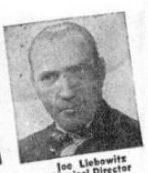
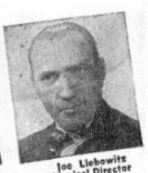
It would be Joseph Leibowitz of DeLuxe records who would discover the group. Darbone recalls his encounter with DeLuxe:
Right after Harry Choates recorded Jole Blon, I wrote to a company out of Houston. It wasn't the same company that he had recorded for, but there was another company there. We sent them some records that we had cut here at one of the music stores in Lake Charles. Then they wrote back and said they didn't think we're going to record that type music. In the meantime, this fellow that was with the DeLuxe, he must have had connections, but he got some way, he got in touch with the same company. They referred our band to him. 1
Part of their recording set list had Luderin Darbone on fiddle, Edwin Duhon on bass, Grover Heard on lead guitar, Lennis Sonnier on acoustic guitar, Neil Roberts on trumpet, Westley "Chink" Widcamp on bass, Gary Major on sax, and Lefty Boggs on drums.
Hey, Hip and Taïaut, dear,
Who stole my sled, dear,
When they saw I was mad, dear,
They returned my sled.
Hey, Hip and Taïaut, dear,
Who stole my hat, dear,
When they saw I was mad, dear,
They returned my hat, dear.
Hey, Hip and Taïaut, dear,
Who stole my hat, dear,
When they saw I was mad, my man,
They returned my hat, dear.
Hey, Hip and Taïaut, dear,
Who stole my hat, dear,
When they saw I was mad, dear,
They returned my hat, my man.
Lennis Sonnier rejoined the group and they left for New Orleans in 1947. He sang an old classic Cajun tune "Hippityo" (#5035), a cover of the Cleoma Breaux recording "Ils La Volet Mon Trancas".
http://arhoolie.org/hackberry-ramblers/
Release Info: D 344 Te Petite | DeLuxe 5035 A D 349 Hippitiyo | DeLuxe 5035 B Find:
Louisiana Cajun Music Volume 8: The Hackberry Ramblers - Early Recordings 1935-1948 (Old Timey, 1988)
The Hackberry Ramblers were a western-swing group that employed Cajun French lyrics in many of their tunes. The group, named after the town of Hackberry, Louisiana, started with Luderin Darbonne and Edwin Duhon. Later in 1933, as their popularity spread, new musicians were added. The Ramblers began regular radio broadcasts, driving from Hackberry to radio station KFDM in the old Majestic Hotel in Lake Charles to make early morning broadcasts.1 According to the recollection of Crawford Vincent, the first drummer to be employed by a Cajun band, the Ramblers played their first club dance in the Blue Andrus Dance Hall in late 1933. They were applauded. In 1935, the Ramblers moved to Crowley, which was centrally located to the spots across south Louisiana and east Texas where they were being booked.1
Pete Duhon, working as electrician
By 1937, the group had changed and added Claude "Pete" Duhon Sr. to the band's mix. In 1938, the lineup changed. Lennis Sonnier got married and was replaced by Floyd Shreve. Luderin hired Floyd's brother, Danny Shreve shortly afterwards. Crawford Vincent notes that the Shreve Boys had played with Leo Soileau previously and were good musicians. Both were local boys who joined by the Ramblers first bassist, Claude "Pete" Duhon, a Crowley native.2 They entitled the instrumental song "La Breakdown A Pete", likely as an ode to their bass player.
Hackberry Ramblers Minus Broussard, Crawford Vincent, Luderin Darbone, Jack Theriot
Pete had come to Luderin, wanting to learn an instrument and begin playing in the band. So Luderin helped him after he had bought a bass fiddle for $15.00 from a local black man.2Pete played with the group while working as an electrician in Vermilion parish. However, this session would be their last before WWII, and the last recordings of Pete completely. Luderin got married and moved back to Hackberry, and suddenly, their recording career would cease. Luderin speculated on why Bluebird Records never called them back:
I suppose they couldn't find me.2
"Hackberry Ramblers Making music since 1933". DON KINGERY. American Press, Friday, September 24, 2004
Discussions with Ron Yule
Find: The Cajuns: Songs, Waltzes, & Two-Steps (Folkways, 1971)
The Hackberry Ramblers had sustained a successful Cajun music career between 1935 and 1939. In 1940, they disbanded when some musicians were drafted for World War II. Fiddle player, Luderin Darbone, reorganized; bringing back Edwin Duhon and adding Eddie Shuler. During that time, the group was looking for a steady place to play. A year after World War II ended in 1945, Leo Soileau moved from the Silver Star Club in Lake Charles to begin a regular stand at the Showboat in Orange, Texas. The Hackberry Ramblers replaced him and played every Saturday night at the Silver Star for 10 years. In addition, the band added Chink Widcamp on bass.
Fais pitie t'voir, mais, comme un pauvre hobo,
(Plus) de soulier, (plus) d’argent, mais, ça sa fait pitie,
Eh, catin.
J'ai parti pour Texas, mais, comme un pauvre enfant,
Par rapporte à la belle, mais, si moi, j'suis comme ça, chere.
Oui, oui.
Lake Charles American Press Jul 11, 1947
They were always traveling, like poor hobos. In one instance, they quickly raced to a recording session to lay down several tunes, including an old Breaux Brother's recording called "Les Tracas Du Hobo Blues". In a way, the song exhibited the bands essence. In 1947, Luderin was contacted by Joseph Leibowitz of Deluxe records where they were requested to record over two hours away in New Orleans. Luderin Darbone recalls the DeLuxe encounter:
One day I was at work, and I got a long distance call from St. Louis, Missouri. It was this fellow with the DeLuxe. He wanted to know if he could come down and listen to us play. I said "Sure". I told him where we were playing. Sure enough, that next night before we started the dance, I went into Lake Charles at the Majestic Hotel, that's where we were to meet.1
He was in Linden, New Jersey. He called me and said for me to be in New Orleans on Sunday with the band. We played the dance Friday night. I worked Saturday. We played Saturday night. We left after the dance, went to New Orleans. We didn't sleep. We started recording about 2:30. We recorded to 11:30 that night. We left and had to be back to go to work the next morning. I slept 30 minutes in all that time. I don't know if I could still do that.1
You're pitiful to look at, well, like a poor hobo,
No more shoes, no more money, well, that's pitiful.
Eh, little doll.
I have left for Texas, well, like a poor child,
(It's) because of the pretty girl, well, if I'm like that, dear.
Yeh, yeh.
Edwin Duhon and Luderin Darbone
During this session, the group recorded the song which Harry Choates had just popularized for Gold Star records that year, called "Pauvre Hobo" (#5037). Sung by guitarist Lennis Sonnier, he was backed by Luderin's fiddle, Grover Heard's lead guitar, and Lefty Boggs' drums. Many of these recordings were co-released on their 6000 series. DeLuxe hadn't prepared for this field recording. The recording levels were too low. Since they were in discussions with plans to be merged with King records, little was done to market or give much consideration to the recording. Darbone wrote a letter, complaining it wasn't near the sound compared to Harry Choates, but to no avail.1
http://arhoolie.org/hackberry-ramblers/
"Hackberry Ramblers Making music since 1933". DON KINGERY. American Press, Friday, September 24, 2004
The Hackberry Ramblers were the first band in southern Louisiana to bring electronic amplification to area dancehalls. Many of these venues still did not have electricity, and the Ramblers powered their primitive Sears-Roebuck “P. A. system” from the battery of Darbone’s idling Model-T Ford. The advent of amplification profoundly changed the local music scene. Until then only the accordion could cut through the noise of a crowd. Stringed instruments such as fiddle and guitar were barely audible and thus relegated to simple accompanying roles playing rhythm parts. Once they could be heard clearly, however, musicians who played these instruments were inspired to take solos and generally improve their technique, thus elevating the prevailing standards of musicianship.1
Dans la prison, chérie, assis sur mon lit,
Comment, donc, je vas faire, chérie, sans ma ‘tite fille?
Sans ma ‘tite fille, chérie, avec les yeux bleus,
Comment, donc, je vas faire, chérie, depuis tu m’aime p’us?
Depuis tu m’aime p’us, chérie, je vas m’en aller,
Je vas m’en aller, chérie, dans le paradis.
Crowley Daily Signal Dec 30, 1940
The 1938 session that produced "La Valse De La Prison" (#2066) would be the band's last Cajun recording stint before the war. Floyd and Danny Shreve backed Luderin up on guitar, with Floyd belting out the French vocals. Claude Duhon filled in on bass. In 1939, they disbanded briefly when Luderin quit playing after the death of his father in an oil-field accident. Luderin formed a new group in the 1940s, teaming with Crawford Vincent and Jack Theriot. The new band kept the old name — Hackberry Ramblers. However, the Ramblers broke up again when some musicians were drafted for World War II. Darbone reorganized, bringing back Edwin Duhon and adding Eddie Shuler.2
In prison, dear, sitting on my bed,
How, then, will I go on, dear, without my daughter?
"A Dollar Here And A Dollar There". The Hackberry Ramblers were formed just as the Great Depression was taking a toll on the music industry and south Louisiana people's lives. Fiddle player Luderin Darbone and accordionist Edwin Duhon created the two-man core of The Hackberry Ramblers, formed in the Louisiana town of the same name in 1932. Darbone and Duhon's musical progress has reflected both the ebb and flow of Cajun music, and its melding with all kinds of musical forms: country, the jazz-tinged form known as western swing, and a palpable black influence.2 Though such eloquence suggests a masterful command of English, both men came to it as a second language, having spent their early childhood speaking French.
When I started school, I couldn't speak English. There were two of us like that; we sat at a little red table. They had an outhouse in those days, they didn't have a toilet inside - and when the kids' hands went up 'cos they wanted to go, we didn't know what they were saying. So by 11 o'clock, I was peeing on the floor. The first English word I learned was when the teacher grabbed us: "Gotcha." She beat us black and blue. Knocked the hell out of us.2
Quand j'ai eu vingt et un ans,
Mon pere m'a dit que j'etais dedans.
C'est l'heure que t'arretes de depenser,
Une piastre ici, une piastre la-bas.
Ca s'fait, moi, j'ai marie une chere petite fille,
Une des filles que moi j'aimais,
Asteur, je connais ca vas etre,
Une piastre ici, une piastre la-bas.
Ma petite femme ellese peut faire du linge,
Du linge pour un bebe,
Et la, je connais ca va etre,
Une piastre ici, une piastre la-bas.
Floyd Shreve, Luderin Darbone, Danny Shreve, Claude "Pete" Duhon
The Hackberry Ramblers were known to cover some traditional French tunes such as "Jolie Blonde" but also perform new compositions such as "Une Pias Ici Une Pias La Bas", a song which sows what it means to live in a money-based economy caught in the throes of the Great Depression. It was one of the many songs Luderin wrote himself.3 The "une piastre" is the most common Cajun term for a dollar, though "un dollar" is sometimes used. "Ça s'fait" is a very common term which might be translated literally "thus", but is used as "and so".1 Recorded at the St. Charles Hotel in New Orleans in 1938, the group assembled band members Danny Shreve on guitar, Floyd Shreve on guitar, Claude "Pete" Duhon on bass, and Luderin Darbone on fiddle and vocals. The group not only recorded for Bluebird throughout the 1930s, they found other ways to keep the money flowing in by playing routinely on KVOL radio station based in Lafayette, Louisiana. Throughout the song, at the end of each verse, the band jumped in together to repeat "une piastre ici, une piastre la-bas", highlighting their mutual feelings about where their money really goes.
Rayne Tribune Feb 19, 1937
When I turned twenty-one,
My father told me what I had to do,
It's time to stop spending,
A dollar here, a dollar there.
So I married a dear little girl,
One of the girls I loved,
Now, I know it's going to be,
A dollar here, a dollar there.
My little woman, she can make clothes,
Clothes for a baby,
And now, I know it's going to be,
A dollar here, a dollar there.
"Une Pias" was later sold to someone in Finland and they used it in an advertisement. Luderin notes:
I never did hear the song they made, but they paid us over $4,000.3
The Hackberry Ramblers were an influential Cajun group based in Hackberry, Louisiana, a small town in the southwestern portion of the state. The group was founded by fiddler Luderin Darbone and accordionist Edwin Duhon in 1933. While the group is famous for their interpretations of traditional Cajun music, they also perform western swing, blues, and rockabilly.
Moi, j'connais,
Ma 'tite fille.
T'es la bas dans l'grand bois tout seule.
Moi, j'm'en vas dans l'grand bois.
Moi, j'm'en vas dans l'grand bois.
Avec ma fille.
Floyd Shreve, Luderin Darbone,
Danny Shreve, Claude "Pete" Duhon
The personnel of the Hackberry Ramblers on this 1938 recording of "Dans Le Grand Bois (In The Forest)" (#2059) is Luderin Darbone on fiddle, Floyd and Danny Shreve on guitars, and Claude "Pete" Duhon Sr. on string bass and vocal. Whether Pete Duhon was a relative of Edwin Duhon is not clear.
I know,
My little girl,
You're over there in the forest, all alone,
I'm going into the big forest,
I'm going into the big forest,
With my girl.
Recorded for Bluebird in New Orleans in 1938, "Dans Le Grand Bois" (#2059) reflects the influence of non-Cajun music, particularly country and western swing. Pete/Edwin Duhon's lead vocal includes the distinctive vocal yelp towards the end of each line, so often associated with Cajun music.1 By 1947, Luderin would be contacted by DeLuxe records to re-record the tune. This time, the band added Grover Heard on lead guitar, original member Edwin Duhon on bass, Lefty Boggs on drums, Gary Major on sax, and Neil Roberts on trumpet. According to Henry Wright, a fellow old time music enthusiast:
The...lyrics seem to evoke a visit or a date in the woods. To me this suggest the singer is telling us about a date or rendez-vous with a woman in a secluded spot, perhaps in or near the bayou, taking into account that it is a Cajun song.1
Find: Louisiana Cajun Music Volume 8: The Hackberry Ramblers - Early Recordings 1935-1948 (Old Timey, 1988) Anthology of American Folk Music, Vol. 4 (Revenant, 2000) Cajun Early Recordings (JSP, 2004) American Folk Music, Vol. 1 (Classic, 2009) American Folk Stories (Shami Media, 2014) The Pioneers of Country, Vol. 3 (Shami Media, 2014) Folk in America, Vol. 2 (Shami Media, 2015)
The Riverside Ramblers were actually the Hackberry Ramblers recording by a different name. By 1936, the band was broadcasting from the Montgomery Ward store in Lake Charles and the station held a contest as to what to name the group. The store's most popular tire was the "Riverside" and some listener won with the suggestion of Riverside Ramblers. In 1937, when Joe Werner was in the band, they went to record again and did a song Joe claimed he had learned from an itinerant, hobo guitar player in Rayne. Legend has it, the two musicians exchanged stories and songs, including the name of this song called "Wondering" (#6926), and it became the biggest seller the Hackberry/Riverside Ramblers ever had.1 It made Joe Werner a star and he quite for a while to form his own band and recorded for the Decca label. When asked how "Wondering" came into being, Joe laughed and said:
It was back in my courtin' days. One day I sat down and started picking away at the guitar and playing the harmonica and the tune fell together. I worked out the words the same way. It was in Paco's Cafe over in Rayne. I had the song and words before I left Paco's that night.5
Paco's Cafe 9 Rayne by Tony Olinger
He explained that he later got help to have the song written since he wasn't able to write music. Preston Trahan, who was a pianist with an orchestra "somewhere up North" was the one who wrote the music down for him.5 Actually, Trahan was a well known pianist from Rayne, that worked for Frank Mier's Orchestra throughout the 1920s.8
For years, many believed Joe Werner was the original writer of the song. However, historians now know the song is a cover of a Jack Golding 1928 recording for Gennett records called "Wondering". Evidently, it was doubtful that Bluebird was aware of the original tune which Werner was borrowing from. Werner recorded the tune alongside Luderin Darbone on fiddle and Lennis Sonnier on guitar.
Daily Advertiser Jun 24, 1937
Wonderin', wonderin' who's kissin' you
Wonderin', wonderin' if you're wondering too
Ev'ry hour through the day since you've been away
I keep wonderin', yes, wondering if you're wonderin' too
I pray every night to the good Lord above
To send back to me the one I really love
Wonderin', wonderin' who's kissin' you
Wonderin', wonderin' if you're wondering too
Ev'ry hour through the day since you've been away
I keep wonderin', yes, wondering if you're wonderin' too
(Instrumental Break)
I pray every night to the good Lord above
To send back to me the one I really love
Wonderin', wonderin' who's kissin' you
Wonderin', wonderin' if you're wondering too
Ev'ry hour through the day since you've been away
I keep wonderin', yes, wondering if you're wonderin' too
Joe Werner, Luderin Darbone, Lennis Sonnier
The Hackberry Ramblers however liked their original name but made a compromise when they went to record again. Their Cajun numbers were labeled as by the Hackberry Ramblers and their English material as by the Riverside Ramblers. The outfit got a call to do some recordings in New Orleans. Joe went along for the ride. Joe stated:
Victor picked it up and made one of them old Bluebird records of it.5
Joe's "Wondering" went over the country and into Canada. GIs in Europe told him after the war that they had heard it on record in the service clubs of England and Germany and elsewhere.5 Joe claims he got paid $150 for the song.7
Joe Werner and Oscar "Paco" Borne Daily Advertiser Feb 21, 1952
By the end of that year, Decca's A&R man tried getting several of the members to move over to their label. "Wondering" as by the Hackberry Ramblers was a very successful record, so much so that the Decca label were very keen to get the band to record the number for them. Fiddle player Luderin Darbonne told them it would mean the band reneging on their contract with RCA Victor, something he and the group wouldn't entertain. Seemingly Joe Werner then came to see Luderin to announce that he was leaving the Hackberry Ramblers and was going to record for Decca.4 He even tried to convince Darbone, but to no avail.
RCA has been real good to us. They call us every time to come to New Orleans to make records...I don't feel like I should leave.1
Darbone was unaware that Werner had obtained the copyright of the song after Decca had discussed the possibility of him recording for the company. Thus Joe jumped ship to Decca and by the end of the year, they had him re-record the tune as "Answer to Wondering" with a new group, Louisiana Rounders.4 By 1951, Webb Pierce signed a contract with Decca. His third release, "Wondering", took off slowly but eventually spent four weeks at the top in 1952. By 1952, Joe gave up entertaining, mainly due to the loss of his son Richard the previous year in a tragic accident. His 10 year old son, who used to accompany him on the KSIG radio program, swerved his bike into a tractor trailer, killing him.6 Joe continued to collect royalties on the song ever since. In 1952, Joe stated,
Your heart's got to be in your song, and ours just wasn't after the loss of our only son.10
Hackberry Ramblers Early Recordings 1935-1948 LP Cajun Old Timey. Liner notes.
Country: A Regional Exploration By Ivan M. Tribe
CAJUN-Rare & Authentic. Pat Harrison. Liner notes.
"Werner's Wondering Finds New Popularity". H.I. Mitchell. CDS. 1952.
"Richard Werner Killed In Bike-Truck Mishap" CDS 4-28-1951
CDS 12-12-1967
"Work Complete On Legion Blackface Show" RT 8-4-1928
Rayne By Cheryl McCarty, Tony Olinger
The Daily Advertiser (Lafayette, Louisiana) 21 Feb 1952
Find: Louisiana Cajun Music Volume 4: From The 30s To The 50s (Old Timey, 1972) Hackberry Ramblers: Early Recordings 1935-1950 (Arhoolie, 2003) Cajun Louisiane 1928-1939 (Fremeaux, 2003) Cajun Country, Vol. 2, More Hits from the Swamp (JSP, 2005) The Beginner's Guide to Cajun Music (Proper/Primo, 2008) JOE WERNER Early Cajun Artist (BACM, 2016)