Showing posts with label Gary Major. Show all posts

Monday, March 8, 2021

"Lafayette" - Hackberry Ramblers

The biggest Cajun cover band in the 1930s was the Hackberry Ramblers.  Their pre-war career stretched from 1935 to 1938 covering some of the most iconic songs of the Cajun prairies until RCA's recording activity in south Louisiana began to diminish.  By 1940s, the group had disbanded but reformed again under Luderin's leadership in 1946.  

Luderin's string band contemporary, Harry Choates, had just scored a huge hit with "Jole Blon".   Riding on the popular post-war recording wave, Luderin was contacted by DeLuxe records the following year where his group re-recorded their version of the song "Jole Blon".   During that same New Orleans session, they recorded several Cajun classics, including the original Cajun classic by Joe Falcon called "Lafayette" (#5031). 

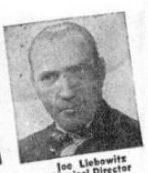
The DeLuxe Record Company was formed in 1944 by David and Jules Braun in Linden, New Jersey. A subsidiary of King Records, the label recorded popular music, rhythm and blues, jazz, gospel and country & western.2   In 1947, Luderin was contacted by their manager, Joseph Leibowitz.   Luderin Darbone recalls the DeLuxe encounter:

He came out and listened to us. He like the way we played, so he said he would record us. He wanted us to go to New Orleans one weekend.1 

Allons à Lafayette, c'est pour changer ton nom,
On va t’appeler Madame, Madame Canaille Comeaux,
Petite, t’es trop mignonne pour faire ta criminelle,
Comment tu crois que moi j'peux faire, mais, mon tout seul.

Eh, malheureux, aller avec un autre,
Comment m'j'va faire, seul a la maison,
Mais toi, mon petit coeur, 'garde, quoi t’as fait,
...

Luderin Darbone4

This time, the band added Chink Widcamp on bass, Edwin Duhon on accordion, Gary Major on tenor sax, Neil Roberts on trumpet, Grover Heard on guitar, Lennis Sonnier on vocals and guitar, and Lefty Boggs on drums.  The group was performing three nights a week in clubs around Lake Charles, frequently catering to soldiers from the Camp Claiborne station.3 

In 1947, Syd Nathan purchased a majority interest in the DeLuxe label, although it continued to be operated out of Linden by the Braun brothers until March, 1949, when the offices were moved to Cincinnati.2  It's believed that "Lafayette" was pressed during this turbulent time, and unfortunately, the copies produced suffered from dynamic range.  By 1951, the label was acquired by King Records.  


Let's go to Lafayette, in order to change your name,
We'll call you Mrs., Mrs. Canaille Comeaux,
Little one, you are too cute to be this bad,
How do you think that I'll handle this, well, all alone?

Hey, oh my, going away with another,
How am I going to handle this, alone at the house,
Well you, my little sweetheart, look at what you've done,
...


  1. http://arhoolie.org/hackberry-ramblers/
  2. https://www.discogs.com/label/51018-DeLuxe-2?page=3
  3. Cajun Breakdown: The Emergence of an American-Made Music By Ryan Andre Brasseaux
  4. National Endowment for the Arts
Release Info:
D 343 Lafayette | DeLuxe 5031 A
D 342 Crowley Waltz | DeLuxe 5031 B

Tuesday, November 5, 2019

"Silver Star Stomp" - Hackberry Ramblers

By the late 1940s the Hackberry Ramblers had evolved from a small string band into a large western swing ensemble, complete with a horn section. Edwin Duhon now played acoustic bass, piano, or accordion, as the moment demanded, all the while working in the oilfields. The group made some fine recordings with this configuration for the Deluxe label.1  Deluxe had recorded the group at a club across the street from the Silver Star dance hall in Sulphur, Louisiana one night after performing.  Luderin Darbone played fiddle and sang while Lennis Sonnier backed him up on rhythm guitar.

 Hired in 1946, the Silver Star was a place where the Ramblers often outplayed Cliff Bruner's group during battle-of-the-bands competitions.  Sometimes they'd win dance contests simply by striking up their French version of local favorite "Jole Blon".   Recalling performing opposite a number of popular musicians, including Moon Mullican and T. Texas Tyler, Edwin Duhon stated:


We'd play "Jole Blon".  They'd count how many dancers.  We'd win every time.  Cliff Bruner, same way. We just beat the shit out of him.2,4 


Tu m'as quitté pour t'en aller, pour t'en aller avec un autre,
Audjourd'hui, j'apres me braillier, 
J'apres me braillier, pour t'en venir, t'en venir avec un nègre, 
Audjourd'hui, j'apres me braillier. 


Lake Charles American Press
Sep 17, 1954

Places like the Silver Star dotted Hwy 90 during the 1940s.  The Star's "house band" during the late 1940s, led by guitarist Amos Comeaux, occasionally would broadcast live from the dancehall itself via KWSL.  Accordion to author and historian Nola Mae Ross:
Nearly every square foot along a 35 mile strip from Westlake (Louisiana) to Orange (Texas), called the "Silver Strip", was occupied by a dance hall or casino with back rooms where gambling was enjoyed by thousands of area citizens.5


Hackberry Ramblers, 1948
Lennis Sonnier, Neal Roberts, Lefty Boggs,
Luderin Darbone, Edwin Duhon

In order to compete with the "big band" crazy in the 1940s, the Hackberry Ramblers changed up their lineup in order to land performances in the same venues as big orchestras.  The 1948 tune "Silver Star Stomp" (#6038) is a swinging version of Papa Cairo's "Big Texas" with a brass accompaniment by Gary Major on saxophone and Neil Roberts on trumpet.  Throughout the song, Grover Heard fills in with a rocking guitar solo. The remaining band had Edwin Duhon on bass and Lefty Boggs on drums.  The whole session for DeLuxe was recorded live at a dance-hall across the street from the Silver Star.  According to Luderin:


We started at the Silver Star in 1946 and played until '56.  We built our home with the money from the dances I played. Each brick on our home represents one tune I played, during the 10 years of Saturday nights at the Silver Star on old Highway 90.3,7


You've left me to go away, to go away with another,
Today, I'm crying,
I'm crying, for you've come back, you've come back to your man,
Today, I'm crying. 


Lake Charles American Press
May 20, 1954

By the early 1960s, however, demand for the Ramblers’ sound dwindled, along with general interest in Cajun music. Luderin Darbone considered disbanding the group, but Chris Strachwitz—the guiding force behind Arhoolie Records, who has documented a wealth of Louisiana music—encouraged the Hackberry Ramblers to stay active. Strachwitz recorded the Ramblers in 1963 and also reissued some of their Bluebird classics.1    


According to author and Hackberry Ramblers drummer, Ben Sandmel,
I think "Silver Star Stomp" reflects southwest Louisiana's transition from a totally isolated rural agrarian French-speaking area to a far more industrialized (primarily oil) bilingual region where Cajun culture interacted significantly with mainstream America, in the context of vast changes in communication which made that interaction ever more far-reaching.  Some of the other DeLuxe sides are weak but this one, to my ear, is a gem.  And it really gives a sense of evolving music history.6  


  1. https://www.knowlouisiana.org/entry/hackberry-ramblers/
  2. Crossroads: A Southern Culture Annual By Ted Olson
  3. http://ereserves.mcneese.edu/depts/archive/FTBooks/hackberry.htm
  4. Cajun Breakdown: The Emergence of an American-Made Music By Ryan Andre Brasseaux
  5. Louisana Folklife Journal. Vol 37.  2013.  Ron Yule.
  6. Discussions with Ben S
  7. Cajun Dancehall Heyday by Ron Yule 
  8. Lyrics by Smith S
Release Info:
D 942 Dans Le Grand Bois | Deluxe 6038-A
D 944 Silver Star Stomp | Deluxe 6038-AA

Wednesday, May 9, 2018

"Hippitiyo" - Hackberry Ramblers

The Hackberry Ramblers had been playing music since 1933 and by 1936, they were the darlings of Bluebird Record producer Eli Oberstein.  But by 1939, the Hackberry Ramblers were having a hard time staying together. Luderin Darbone had quit playing and the recording industry ignored Cajun music.   After the war, Cajun music was hot again, and Luderin decided to get the group back together.  

Deluxe had already worked with Bill Quinn of Houston when he needed the outfit to help press his Harry Choate recording "Jole Blon".  With this arrangement, Deluxe had entered into the Cajun music market.  


Eh, Hip et Taïaut, chere,

Qu'a volé mon traîneau, chere,
Quand il a vu j’étais devenu chaud, chere,
Il a ramené mon traîneau.

Eh, Hip et Taïaut, chere,
Qu'a volé mon chapeau, chere,
Quand il a vu j’étais devenu chaud, chere,
Il a ramené mon chapeau, negre.

Eh, Hip et Taïaut, chere,
Qu'a volé mon chapeau, chere,
Quand il a vu j’étais devenu chaud, negre,
Il a ramené mon chapeau, chere.

Eh, Hip et Taïaut, chere,
Qu'a volé mon chapeau, chere,
Quand il a vu j’étais devenu chaud, chere,
Il a ramené mon chapeau, negre.


It would be Joseph Leibowitz of DeLuxe records who would discover the group.  Darbone recalls his encounter with DeLuxe:
Right after Harry Choates recorded Jole Blon, I wrote to a company out of Houston. It wasn't the same company that he had recorded for, but there was another company there. We sent them some records that we had cut here at one of the music stores in Lake Charles. Then they wrote back and said they didn't think we're going to record that type music. In the meantime, this fellow that was with the DeLuxe, he must have had connections, but he got some way, he got in touch with the same company. They referred our band to him. 1
Part of their recording set list had Luderin Darbone on fiddle, Edwin Duhon on bass, Grover Heard on lead guitar, Lennis Sonnier on acoustic guitar, Neil Roberts on trumpet, Westley "Chink" Widcamp on bass, Gary Major on sax, and Lefty Boggs on drums.


Hey, Hip and Taïaut, dear,

Who stole my sled, dear,
When they saw I was mad, dear,
They returned my sled.

Hey, Hip and Taïaut, dear,
Who stole my hat, dear,
When they saw I was mad, dear,
They returned my hat, dear.

Hey, Hip and Taïaut, dear,
Who stole my hat, dear,
When they saw I was mad, my man,
They returned my hat, dear.

Hey, Hip and Taïaut, dear,
Who stole my hat, dear,
When they saw I was mad, dear,
They returned my hat, my man.

Lennis Sonnier rejoined the group and they left for New Orleans in 1947.  He sang an old classic Cajun tune "Hippityo" (#5035), a cover of the Cleoma Breaux recording "Ils La Volet Mon Trancas".  


  1. http://arhoolie.org/hackberry-ramblers/

Release Info:
D 344 Te Petite | DeLuxe 5035 A
D 349 Hippitiyo | DeLuxe 5035 B

Find:
Louisiana Cajun Music Volume 8: The Hackberry Ramblers - Early Recordings 1935-1948 (Old Timey, 1988)