Showing posts with label Isidore Guidry. Show all posts

Monday, March 16, 2020

"La Valse Du Mariage" - Guidry Brothers


When early Cajun music artists are discussed, rarely does the location of St. Martin parish come to mind.  However, it would take an obscure group from the Anse La Butte area to record one of the more amiable marriage songs in the Cajun bayou.  Shelton Devillier, grandson of Dosete Guidry, remembered asking his grandfather the name of their band. Dosete replied, “Guidry Brothers!”  All of the brothers in the Guidry band played multiple instruments. Shelton, stated, 
Dosete loved the violin. That was his favorite. He played the accordion. He played the mandolin.1 


C'est dans un petit village, j'ai rencontré une jolie brune,
J'ai commencé lui faire l'amour, elle m'a montré ses amitiés,
J'ai aussi parlé du mariage, elle m'a donné-z un contentements,
Cela m'a mis beaucoup content et remplit mon cœur de joie.

(yodel)

Chere amie, si t'es pareille, on va aller dedans l’église,
Se présenter devant l'autel et le prêtre nous mariera,
Le contrat sera passé, et le billet se signera,
Et ton cœur sera pour moi et mon cœur sera pour toi.

(yodel)

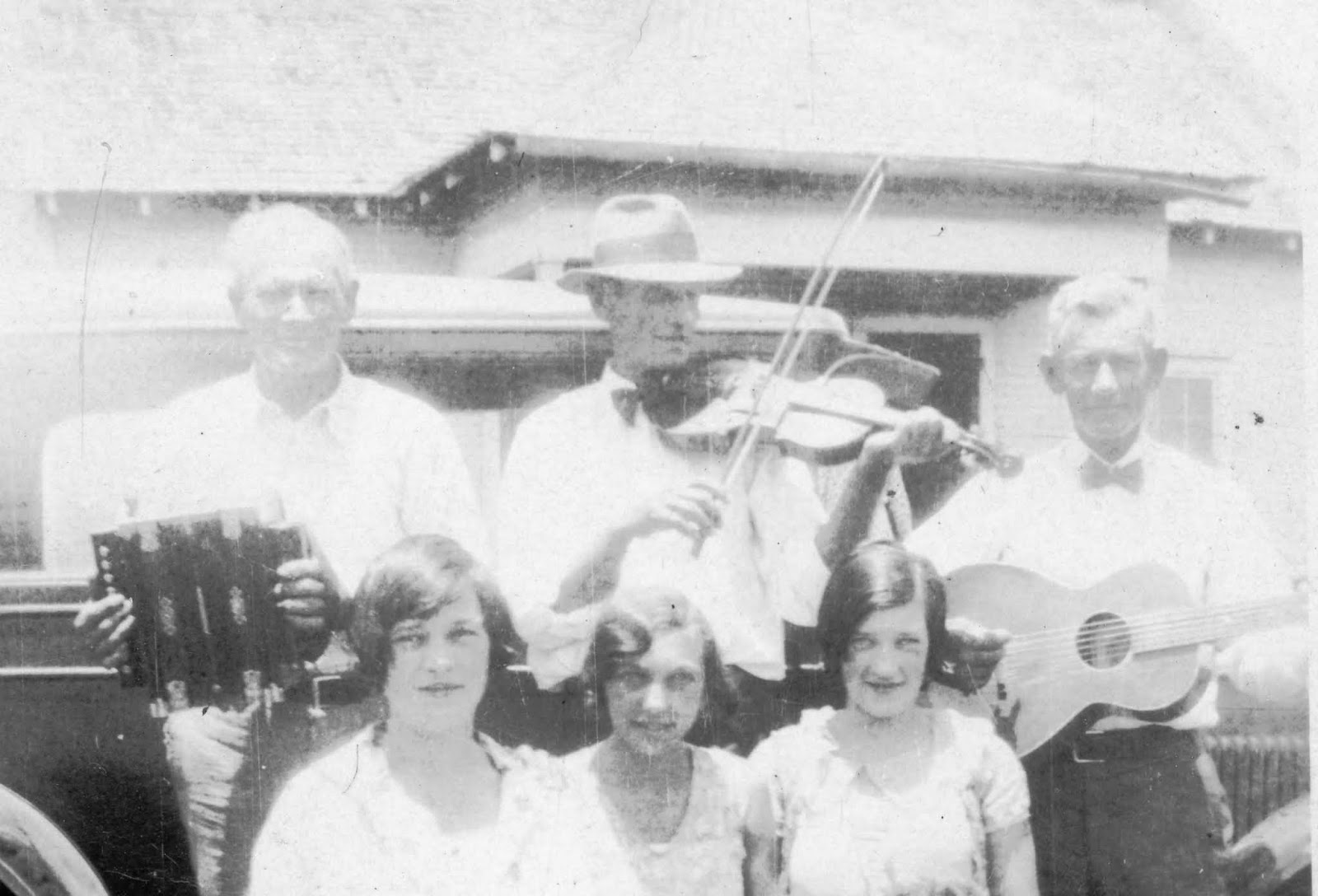
Arthur Guidry, Dosete Guidry, Isidore Guidry

Something wonderfully unique is their recording of "La Valse du Mariage" (#15864), an alternate take on a Cajun wedding march. Different from the more popular "La Marche de Mariés", it speaks of the joy of meeting a pretty girl and wishing to get married at the altar.  Unlike many Cajun songs that discuss the fears of leaving behind the single life, the Guidrys sing of a lover excited to marry his longtime love interest.  According to record producer Christopher King,
I like the marriage waltz. If I could travel back to the 1880s in southwest Louisiana, I could imagine having heard this at a common plantation wedding.1   


In a little village, I met a pretty brunette,
I started flirting, she shared with me her friendship,
I also talked about marriage, she gave me a commitment,
It made me very happy and filled my heart with joy.

(yodel)

Dear friend, if you'd like, we'll go inside the church,
Go to the altar and the priest will marry us,
The contract will be passed (around), and the record will be signed,
And your heart will be for me and my heart will be for you.

(yodel)


  1. "Breaux Bridge At Center of 90-Year-Old Cajun Music Mystery".  Wade Falcon.  Teche News.  2019. 
  2. Lyrics by Stephane F and Jordy A

Release Info:
NO-242 Le Garcon Chez Son Pere | Vocalion 15854
NO-243 La Valse Du Mariage | Vocalion 15854

Find:
Cajun Country, Vol. 2, More Hits from the Swamp (JSP, 2005)

Friday, April 26, 2019

"Homme Abondonne" - Guidry Brothers


In 1929, the sound of south Louisiana was taking shape. Cajun music was getting a foothold in the recording industry; getting discovered outside of south Louisiana for the very first time. By October, three brothers arrived in New Orleans for a recording session alongside some of the more well-known Cajun musicians of the time. Composed of an accordion player, fiddler and guitarist, the family trio waxed six songs for the major recording label Vocalion Records. Some of their melodies, the first to be found on commercial recordings, can be recognized as familiar tunes we hear today. But as quickly as they were discovered, they faded away.1

They were known as the Guidry Brothers of St. Martin Parish and for most people, their music and identities were almost lost to time.  The three musicians – Arthur, Isidore and Jean Dosete Guidry – were natives of Breaux Bridge. Sons of Alcide Guidry and Marie Louise Hebert, they lived a simple life as tenant farmers.1   

Tous les tracas moi j'ai eu dans ma vie,
C’était te faire venir, toi malheureuse,
Et aujourd'hui, mais, tu veux me pousser,
Un jour à venir, tu vas voir ton erreur.

Ouais, toi, mignonne, observe bien ça t'as fait,
Et tu vas voir, moi, je méritais pas ça,
Si loin de moi comme toi tu peux dire,
Toi, toujours content pour aller te joindre.

Moi connais bien t'as eu de conseiller,
C'est bien tu n'fais, moi je peux pas t'oublier.
T'aurais pas du écouter les conseils.

Si tu m'abandonnes, toi, malheureuse,
J'vas m'en aller où jamais tu vas me voir,
Tu dis toi même la mort c’est bien triste,
Mais, j'aime mieux de mourir, que autre qu'être m'abandonnes.
Arthur Guidry (accordion),
Dosete Guidry (fiddle), Isidore Guidry (guitar)

Arriving in New Orleans, and sponsored by Boudreaux's Music Shop, the trio recorded "Homme Abondonne" (#15849).   According to Dosete's grandson, Patrick Thibodeaux, 
Papa Dosete started putting this song together while working in the field. Got home and grabbed his fiddle, put the words to music... Jolie Blonde!1  

Although Amede Breaux holds the title to the original 1929 Jolie Blonde recording, the Guidrys’ take on the instrumentation was unique. Instead of singling out a “pretty blond,” Arthur attached his own lyrics to the popular melody, talking about a man abandoned by his lover.1  


Daily Advertiser
Oct 3, 1929

All the trouble I've had in my life,
It was to make you return, you bad woman,
And today, well, you want to drive me (crazy),
One day you'll return, you will see your mistake.

Yeah, you cutie, look at what you've done,
And you'll see, I did not deserve all of that,
So far from me as you are, you could say,
You, I'm always ready to go join you.

I know well, you've had advice,
It's good (that) you didn't, I cannot forget you,
You should not have listened to the advice.

If you abandon me, you bad woman,
I'm going to go where you're never going to see me,
You said yourself (that) death is very sad,
But, I'd rather die, other than to be abandoned.


  1. "Breaux Bridge At Center of 90-Year-Old Cajun Music Mystery". Wade Falcon. Teche News.  St. Martinville, La. - Wednesday, April 24, 2019.
  2. Lyrics by Stephane F
Release Info:
NO-244 Le Garcon Negligent | Vocalion 15849
NO-245 Homme Abondonne | Vocalion 15849

Find:
CAJUN-Rare & Authentic (JSP, 2008)

Thursday, September 22, 2016

"Le Garcon Negligent" - Guidry Brothers

The Guidry Brothers had a short stint recording for Vocalion in 1929.  The group, most likely from south Louisiana, consisted of either 3 or possibly 4 members however, it's unknown.  Only 6 songs were listed in the session sheet. 


Allons aller voir la ‘tite fille,

Il y a bien longtemps, j’ai pas eu des nouvelles,

Les jours passés, j’ai envoyé un mail,

Elle m’a jamais renvoyé des nouvelles.


Hé, quoi tu fais, toi, chère petite fille,

T’es après me laisser pour partir avec un autre,

T’aurais pas du me faire des promesses,

Mais quelles nouvelles j’vas apporter à mon père?


T’avais pas su le malheur que j’ai eu, 
Quand j’arrivais, la belle était partie,
Elle était partie se marrier avec un autre,
Mais, quel espoir que moi j’peux avoir?

J’ai toujours dit, "Toi t'es un garçon,
Qui negligeais beaucoup trop ses visites,
Tu sais toi-même quand y a une belle paix dans l'âme,
Y a toujours quequ' malin pour te la prendre."
"Le Garcon Neglignet" (#15849).   It's the first recording of the similar melody later used in "Big Texas" and "Jambalaya".  Lyrically, the theme is a common one; similar to Jolie Blonde where the love interest leaves with another because of a "negligent boy".  While the word "malin" signifies "intelligent", the context here is more along the lines of "mischevious" or "canaille", similar to "smart-ass". 

Recorded at half-time tempo, it could have easily been the source for the Breaux Brother's "La Valse De Bayou Plaquemine", Cleoma Breaux's "Pin Solitaire", J.B. Fusilier's "Lake Arthur Waltz", Happy Fats' "Gran Prairie", Jolly Boys' "Abbeville", and "Allons Kooche Kooche" by the Louisiana Rounders. 
Come see me, little girl,
It's been a long time, I have not heard any news,
The past few days, I sent a letter,
She never returned any news.

Hey, what you've done, dear little girl,
You've left me to go with another,
You should not have made promises,
Well, what news will I bring to my father?

You didn't have the problems I had,
When I arrived, my beautiful one was gone,
She was gone to get married with another,
Well, what hope can I have?

I have always said "You, you're a boy,
Who neglected far too many visits,
You know yourself when there is a beautiful peace in your soul,
There's always someone mischievous to take it away."


  1. Lyrics by Stephane F
Find:
CAJUN-Rare & Authentic: 1929 - 1934 (JSP, 2008)