Tuesday, March 3, 2015

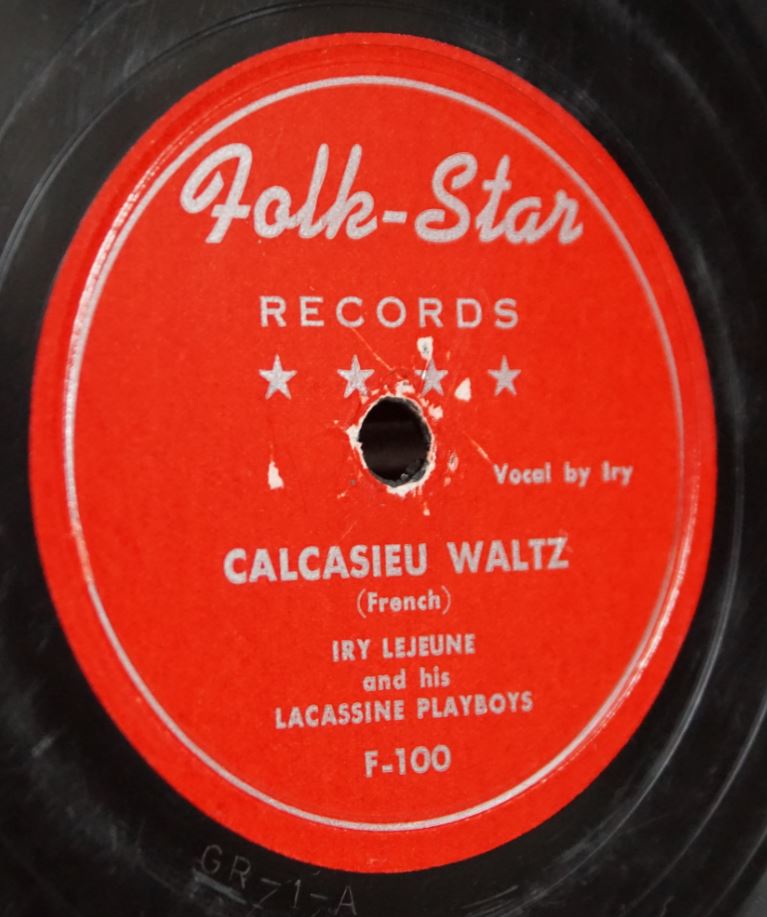
"Calcasieu Waltz" - Iry Lejeune

Iry Lejeune's sound would be copied from a Creole accordion player named Amade Ardoin.  When Iry reintroduced the accordion into Cajun music in the 1950s, he was inspired by many hours spent listening to his Uncle Angelas' old 78s of Ardoin.  In fact, the celebrated return of the accordion into contemporary Cajun music was largely due to Lejeune's versions of Ardoin tunes. 


Hé, gardez donc, moi je connais tu voudrais,
Hé, t'en revnir à la maison pour rejoindre ton nèg.
Hé, catin, moi je voudrais que toi tu reviens, quand-même,
ouias, une fois, mais, oui, une fois avant de mourir.

Oh, jolie, comment moi je vas faire?
Comment toi tu crois j'sus là tout te le temps pour toi?
Hé, 'tite fille, tout le temps après jongler
Autant dans les chagrins pas être capable jamais de t'avoir.

Hé, 'tite fille, pourtant rappelle-toi donc,
Que tu vas toujours écouter un autre que moi.
Hé, c'est pas la peine que moi je te dis quelque chose.
Toi, tu me ressembles pas jamais être contente.

Between 1949 and 1950, Shuler produced Iry's first Folk-Star 78 record, "Calcasieu Waltz" (#100).  It was a version of Ardoin's "La Valse de Amitié" recorded back in 1934 in San Antonio for Bluebird.  Similarly, Lee Sonnier composed his "War Widow Waltz" using the same melody roughly around the same time.  Shuler mentioned:


“I bribed the engineer at the radio station to cut the disc for us.  It was easy; just a fifth of Old Crow.”
"His first recording had a fiddle, a guitar, and a steel guitar. Them were all his wife’s brothers. That was “Lacassine Special” and “Calcasieu Waltz,” that was his first recording (on Folk-Star)."

The recording was done during Iry's second session at KPLC in Lake Charles. It included Milton Vanicor on fiddle, Ellis Vanicor on second fiddle and Ivy Vanicor on guitar.  Calcasieu is an Attakapas word that means "crying eagle" named after an Attakapas Indian chief who gave a peculiar cry like an eagle as he went into battle.   Eventually a parish was named after him; with the song taking the name from the parish.  
Doug Kershaw and Iry Lejeune
Avalon Club


Hey, look, I know that you'd like,

Hey, to come back home to join your lover.

Hey, doll, I'd like for you to come back, even if,

yes, one time before dying.


Oh, pretty girl, what am I going to do?

How can you believe I am always there for you?

Hey, little girl, I am always thinking in sorrow about because I'm can't ever have you.


Hey, pretty girl, remember well!

You will always listen to another besides me.

He, there's no use for me to tell you anything.

It seems you can never be happy.

Eventually, Lee Sonnier, along with Laura Broussard on vocals, would record a slower version of the melody and call it "War Widow's Waltz".  


  1. The Kingdom of Zydeco By Michael Tisserand
  2. Iry Lejeune: Wailin The Blues Cajun Style by Ron Yule
  3. http://www.wendyrodrigue.com/2011/04/iry-lejeune-cajun-accordion-player.html
Find:
The Legendary Iry LeJune (Goldband/Swallow, 1991)
The Legendary Iry LeJune Vol. 1 (Goldband/Swallow)
The Legendary Iry LeJune Vol. 2 (Goldband/Swallow)
Iry Lejeune: Cajun's Greatest; The Definitive Collection (Ace, 2013)

Wednesday, February 25, 2015

"Rice City Stomp" - Hackberry Ramblers

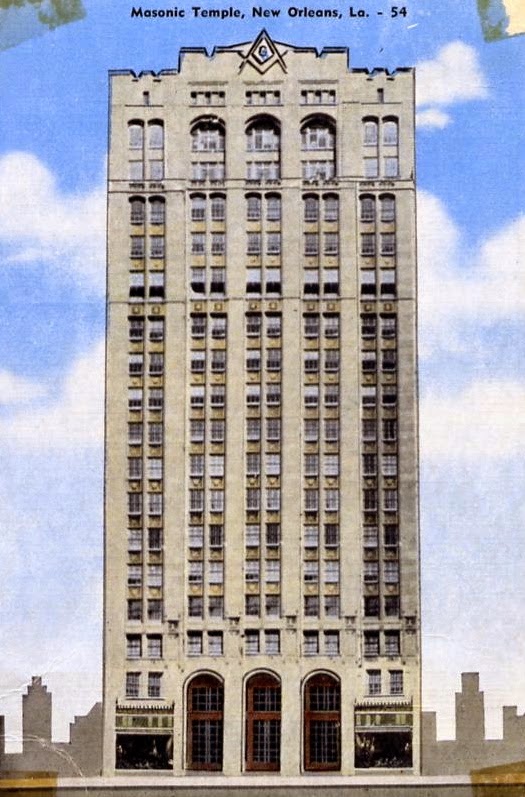
The Hackberry Ramblers had one of the longest histories of a musical group in the United States of America.  Having begun their recording career in 1935 and helping fill Bluebird records commitment of more rural field music, two years later, they would be in the Bluebird's makeshift studio in the Masonic Temple in New Orleans. There, they would record a slew of songs, one which would be an ode to the city of Crowley, Louisiana called the "Rice City Stomp" (#2017).  Given the song was in french, Bluebird kept their name listed as Hackberry.

C'est la vie des Cajuns, 

Sont partir couper du bois, 

Pour emmener son hache à main,

Pour chasser les ouaouaron.
Hackberry Ramblers, 1945
Westley "Chink" Widcamp (bass),
Jim Gentry (mandolin),
Luderin Darbone (fiddle),
Eddie Shuler (guitar),
Edwin Duhon (guitar seated),
Lennis Sonnier (guitar)

Crowley has been the heart of Acadia Parish; an area which became the capital of rice farming for south Louisiana since the 1870s. However, it wouldn't be unusual to have the locals in the nearby town of Rayne, known for it's frog export businesses, to chop up frogs and use the frog meat for dinner.  The song seems to be a slower version of "T'en A Eu, T'en Au Vas" which is better known as "Step It Fast" first recorded by the Breaux family. The group consisted of Lennis Sonnier on guitar, Joe Werner on harmonica, Luderin Darbonne on fiddle, and either Joe or Lennis on vocals. Johnny Purderer on upright bass. It contains one the shortest set of lyrics in Cajun music, with a strong harmonica sound by Joe Werner filling in for solos.
New Orleans
Masonic Temple


It's the life of the Cajuns,

To leave chopping wood,

Taking an axe,

To hunt bull frogs.


  1. The Old-time Herald: A Magazine Dedicated to Old-time Music, Volume 9
  2. Lyrics by Jerry M
Find:
Early Recordings: 1935-1948 (Arhoolie, 1988)
Hackberry Ramblers: Early Recordings: 1935-1950 (Arhoolie, 2003)
Cajun Country, Vol. 2, More Hits from the Swamp (JSP, 2005)
Cajun Capers: Cajun Music 1928-1954 (Proper, 2005)
The Best Of Cajun & Zydeco (Not Now, 2010)
The Best Of Cajun And Zydeco (Rapier, 2014)

Wednesday, February 18, 2015

"Unis Two Step" - Floyd Leblanc

Right before Bill Quinn started Gold Star records, he tried out his luck by recording artists locally in Houston and then sending out the masters for production in other places.  Quinn paired up with Bennie Hess of Opera Record Company in Los Angeles, CA producing his first records of the Cajun fiddle player Floyd Leblanc including the "Eunice Two Step" (misspelled "Unis") in 1948.  The song originates with Amede Ardoin's 1929 recording "Two Step de Eunice" for Columbia.

Bennie, originally from Chriesman, Texas, would travel back and forth between Houston and LA and knew Quinn through the business.  In 1948, he formed the Opera label and later signed with Mercury.  


Floyd Leblanc, Iry Lejeune, Ben Oldeg,
Bennie Hess and Virgil Bozman

Ma jolie, mais joli cœur,

Quoi ta fait il y a pas longtemps,

Moi je l'aime, mais jolie fille,

Mais ça, ça m'fait du mal.


Jolie fille, joli cœur,

Tu vas voir, mais, ton vieux neg,

Moi je connais tu vas pleurer,

Mais aussi loin de moi.


Moi je connais, mais jolie fille,

Tu vas voir ton vieux neg,

Joli cœur, mais moi je connais

Mais ça tu fais pitié.
Daily World
Aug 12, 1948

Floyd was from Mermentau, Louisiana and born into a musical family, influenced by his father's fiddle playing and the Hackberry Ramblers.  After WWII, while stationed in San Antonio, he would eventually meet up with Virgil Bozeman and join his group called the "Oklahoma Tornados".  Composed of Ben Oldag on bass, Dudley Champagne on drums, Bennie Hess on guitar, Virgel Bozman on guitar and Floyd on fiddle, Virgil's group became the backup band for any artist that Quinn had in the studio and Floyd took the opportunity to record his own songs.  Virgil had heard Iry play music in Evangeline and Iry convinced Virgil to travel to Houston and record with the Oklahoma Tornados.  There, they produced Iry's first record containing "Love Bridge Waltz" and "Evangeline Special".  Floyd's and Iry's records would be pressed in California on Hess' label.
Bennie Hess


My pretty, but, a pretty heart,

What you did, not long ago

I love you, but, pretty girl, 

It's making me ache.


Pretty girl, pretty heart, 

You'll see, my old friend,

I know you're gonna cry, 

But, you're away from me. 


I know, however, pretty girl, 

You'll see, my old friend,

Beautiful soul, but I know 

Well, that makes you pitiful.
Virgil Bozeman

Eventually, Floyd, Virgel and Iry would make a trek to Nashville in 1947 to seek fortune.  Iry returned home after a couple of weeks, but Floyd played with several bands while there including Enest Tubb's Texas Troubadours and numerous jam sessions with many of the stars on a nightly basis. Hess' label didn't last after Mercury terminated his contract when the company discovered that Hess was bootlegging his own recordings on his Opera label. 

With characteristic exaggeration, Hess later recalled that he was on “the brink of stardom” when this setback occurred. He followed this with seven more of his own releases on Opera through to 1951. For the last Opera release he offered the dealers, in a March 1951 advertisement, a sure-fire hit or 100% returns on records purchased. However, the dealers were unmoved. His Opera label artist Floyd LeBlanc left by signing with Virgil Bozman's new O.T. label whilst Iry LeJeune pacted with Eddie Shuler. 


  1. House of Hits: The Story of Houston's Gold Star/SugarHill Recording Studios By Andy Bradley
  2. Laurie E. Jasinsk, "HESS, ORVILLE [BENNIE]," Handbook of Texas Online
  3. Handbook of Texas Music edited by Laurie E. Jasinski
  4. Louisiana Fiddlers By Ron Yule
  5. Encyclopedia of Great Popular Song Recordings, Volume 2 By Steve Sullivan
  6. http://ereserves.mcneese.edu/depts/archive/SWLAMusicians/encyclokr.htm
  7. http://www.last.fm/music/Bennie+Hess/+wiki
  8. Lyrics by Jerry M


Wednesday, February 11, 2015

"Iota Two Step" - Nathan Abshire

Although not one of Nathan Abshire's more well known songs, this 1951 recording for George Khoury is a rough, upbeat song with his band called "The Musical Five".  In it, he had Will Kegley on fiddle, Ernest Thibodeaux on guitar, Atlas Fruge on lap steel, Jim Baker on bass, and Ozide Kegley on drums.  Together they recorded the "Iota Two Step"  (#612) in Lake Charles.  


‘Tite fille tu m’fais pitié
Ce soir après pleurer,
Quand même, mais malheureuse.
‘Tite fille c’est toi la cause
Mon cœur est si cassé,
‘Tite fille prends donc courage,
Allons j’viens avec toi.

‘Tite fille c’est toi la cause
Si moi, mais moi j’me va,
Là-bas (z)à la maison.
Hey, mais ça ça m’fait du mal
Oh, ouais tu vas pleurer.
Nathan Abshire

Iota is a small town in southwest Louisiana located in the prairies. The song has similarities to the Walker Brothers' 1929 "La Breakdown La Louisianne" recorded for Brunswick in 1929.  In the following years, Robert Bertrand and Nolan Cormier renamed it as the "Pogey Boat Special". 


Lil girl, you make me pitiful
This evening, I cried
Tonight, I cried
Anyways, oh my, i'm miserable.
Lil girl, you're the reason
My heart is so broken,
So lil girl, be courageous,
I'll go with you.

Lil girl, you're the reason
So me, oh my, I'll be fine,
There at the house.
Hey, but it's going to hurt
Oh, yeah you're gonna cry.

 According to Dr. Barry Ancelet, Nathan told him:


I learned to play by myself. I would hear and see others playing. I was six-years-old. I started playing an accordion that cost $3.50. It wasn’t mine. It was one of my uncles. I can’t read. I can’t sign my name, but I make up songs in my head. I listen to them on accordion until they sound like they’re supposed to.


  1. http://www.offbeat.com/2003/10/01/masters-of-louisiana-music-nathan-abshire/
Release Info:
La Valse De Bayou Tech | Khoury's K-612-A
Iota Two Step | Khoury's K-612-B

Find:
Nathan Abshire - French Blues (Arhoolie, 1993)

Wednesday, February 4, 2015

"Continuez De Sonner" - Clifford Breaux

After the Breaux's recorded "Ma Blonde Est Partie" in 1929 (which i covered earlier), they would head to Dallas, TX in 1937 for their last recording session ever where Clifford would record 2 songs accompanied by his sister Cleoma for Decca. One of these would be a Cajun french take on the song "Keep A Knocking But You Can't Come In" called "Continuez de Sonner" (#17043)


Moi, j'sus la ayou tu peux pas rentrer

Moi, j'sus la ayou tu peux pas rentrer

Moi, J'ai un cadenas sur la porte en avant

Moi, j'sus la ayou tu peux pas rentrer


Toi, tu la cogner mais tu peux pas rentrer

Toi, tu la cogner mais tu peux pas rentrer
Moi j'ai un cadenas sur las porte en arriere
Toi, tu la cogner mais tu peux pas rentrer

(Oh boy!)

Moi, j'sus la ayou tu peux pas rentrer
Moi, j'connais t'aime ton pauvre vieux nègre
Non, tu peux pas rentrer

Clifford sings jazz-like scat with a raw, lazy charm along with his swinging fiddle solos. It's the only known Cajun song with a scat style incorporated (that I know of). The first recording of this song seems to be the James "Boodle It" Wiggins version done on Paramount in 1928. This shows some of the influence jazz and blues had on early Cajun music.  Between 1953 and 1954, Nathan Abshire records the same tune but calls it "Tee Per Coine". 
Clifford Breaux and Joe Falcon


I'm in a place where you can't come in
I already put a lock on the door
I'm in a place where you can't come in

You keep a knocking but you can't come in
I have a lock on the back door
You keep a knocking but you can't come in

(Oh boy!)

I'm in a place where you can't come in
I know you love your little boy
No, you can't come in

Clifford would go on to play with Joe Falcon and his band well into the 1960s and by all accounts, he was actually a much better musician all around.


  1. http://www.allmusic.com/album/cajun-string-bands-1930s-cajun-breakdown-mw0000031115
  2. http://npmusic.org/artists.html
  3. Lyrics by N Pomea
Find:
Cajun String Bands 1930's: Cajun Breakdown (Arhoolie, 1997)

Thursday, January 29, 2015

"Attendre Pour Un Train" - John Bertrand & Roy Gonzales

John H. Bertrand was born in Prairie Ronde, a small district near Opelousas, Louisiana. He worked primarily as a blacksmith and taught himself the accordion while in his teens. After a spell away from the Opelousas area he and his family returned in 1924 and settled in a small community, L’Anse Aux Pailles. The young Milton Pitre lived next door and he would back Bertrand at his first session for Paramount in what is thought to have been January 1929.  

He traveled to Chicago twice in 1929 to record for Paramount Records; first time with guitarist Milton Pitre and the second time with guitarist Roy Gonzales and fiddle player Anthony Bertrand. At the time, Pitre would have been around twenty. In a macabre echo of the murder of Mayeus La Fleur, just a few weeks after this recording debut, Pitre was shot dead in an argument over a woman.  John and Milton are most known for the song "The Rabbit Stole The Pumpkin" which would influence two more well-known songs in years to come: Iry Lejeune's "I Went To The Dance" and Lawrence Walker's "Johnny Can't Dance".


Tout autour des "tanks" d'eau après attend' pour un train,
De mille miles de chez moi dans une place qu'est bien vilain.
J'ai monté de voir le conducteur, j'lui ai fait deux ou trois pas,
Il m'a dit si tu as d'l'argent, je vois que tu marches pas.
J'ai pas cinq sous dans ma poche, j'ai rien que j'peux montrer,
Tu peux descendre mon vieux bougre, il m'a fait me dépêcher.
(Yodel)

Ils m'ont fait descendre dans l'Texas, une Etat que j'aime bien,
J'ai r'gardé autour de moi, mais j'voyais pas le train.
Personne ne voulait pas y me donner un coup d'main,
Tu t'en sors (?) mon vieux hobo, dépêche prend ton ch'min.
En poche mon livre était bien vide et mon cœur était en peine,
J'suis mille miles de chez moi pour attendre toujours un train.
(Yodel)


John Bertrand
The recording is extremely rough and any translation is bound to be a guess at best.  Bertrand's style represents an unusual byway of Cajun music that is softer and more introspective than most other styles.  In March or April 1929 Bertrand was invited back for another Paramount session. With the death of Pitre, he appointed Roy Gonzales as back-up guitarist. Gonzales' unique yodeling style would imitate Jimmie Rogers which was popular during the era.  It's one of the few Cajun recordings containing yodeling.


All around the water tanks, I'm waiting for a train,

A thousand miles from home in a place that is very shabby.

I came up to see the driver who was two or three steps away,

He said "If you got money, boy, I'll see that you don't walk",

I don't have five cents in my pocket, I have nothing to show,

"Get off old chap!"  He made me leave quickly.

(Yodel)


They made me go down to Texas, a state that I like,

I looked around me, but I could not see the train,

Nobody wanted to give me a helping hand,

You go away, old hobo, hurry along,
In my book bag was empty and my heart was in pain,
I'm a thousand miles from my house forever waiting for a train.
(Yodel)

How the two came to work together is unclear but from the two numbers included here, the partnership appears to have worked well. During this second and final recording session, John and Roy record the song "Attendre Pour Un Train" for Paramount (#12762).   The song is a Cajun french verison of Jimmie Rogers' "Waiting For A Train".  Roy, a native of Crowley, Louisiana, was good friends with fiddler Leo Soileau.   It's possible the fiddle player on this song is Leo however, it's still unknown.  They would later team up, travelling together with Moise Robin to record for Paramount in Richmond, Indiana during the summer of 1929.  During this session, Roy would re-record "Attendre Pour Un Train" (#12807), this time, by himself. 


  1. Cajun Breakdown : The Emergence of an American-Made Music By Ryan Andre Brasseaux
  2. http://www.venerablemusic.com/catalog/TitleDetails.asp?TitleID=11576
  3. http://www.yazoorecords.com/2042.htm
  4. Photo by Malcom V
  5. Lyrics by Ericajun and Marc C
Find:
John Bertrand / Blind Uncle Gaspard / Delma Lachney Early American Cajun Music (Yazoo, 1999)

Tuesday, January 20, 2015

"Raise Your Window" - Falcon Trio

In 1936, with record sales holding up after the end of the Depression slump, the Victor mobile recording unit under the direction of Eli Oberstein visited New Orleans to record local hillbilly, blues and Cajun artists.  In what was one of the last major field trips, mammoth sessions were held at the St. Charles Hotel, with more than twenty five titles recorded each day.  The ensuing 78s were eventually released on Bluebird, Victor's subsidiary budget label, at a cost of thirty-five cents per copy.  The 2000 series had been set aside for it's Cajun artists.

Among the artists were the Falcon and Breaux musical families.  Joe and Cleoma most likely brought along fiddle player and family friend, Moise Morgan, to fill in the band labeled as the Falcon Trio.  However, some list the third player as Joe's brother, Ulysse Falcon. Leading the vocals, Cleoma sang the song "Raise Your Window" (#2183) for Bluebird.  
If you see me coming, raise your window high,

When you see me coming, raise your window high,

When you see me leaving, hang your little head and cry.


I went home last night, baby, knocked at my front door,

I went home last night, baby, knocked at my front door,

I heard someone say, I don't live here no more.


I found a stranger passing through your town,

I found a stranger passing through your town,

I'd ask a favor, but boy, you'd turn me down.


I can make more money with my pick and guitar than my good old Jersey cow,
St. Charles Hotel
I can make more money than a passenger train can ride

I'm wild about Memphis, fool about Tennessee,
Give me sweet Dallas, Texas where the men think the world of me.

It's an English version of a song she had recorded in Cajun french two years earlier for Decca in New York called "Ouvrez Grand Ma Fenetre" (also referred to as "Leve Tes Fenetres Haut" or "Raise Your Window High").  It's a swingy, bluesy song in the style of Jimmie Rodgers' "Anniversary Blue Yodel (Blue Yodel No. 7)" that most likely has an older origin. Even the lyrics between the two versions changed.  In this version, she sings about leaving her home and traveling the country, making more money playing music than farming, and the men she met in different towns.  Songs, like this 12-bar blues and similar others, would eventually influence Iry Lejeune's "Grand Bosco" and Happy Fats' "Blues de Bosco".


  1. Louisiana Women: Their Lives and Times edited by Janet Allured 
  2. South to Louisiana: The Music of the Cajun Bayous By John Broven
Find:
Raise Your Window: A Cajun Music Anthology 1928 - 1941 (The Historic Victor-Bluebird Sessions Vol. 2) (CMF, 1993)
Cajun Early Recordings (JSP, 2004)
Let Me Tell You About the Blues: New Orleans (Fantastic Voyage, 2011)