Wednesday, March 30, 2022

"A Ute" - Leo Soileau

Cajun fiddler Leo Soileau made a name for himself after waxing four sides for Victor Records in 1928.  He became the second Cajun recording artist after the Falcons and was the first fiddler to record for a major label.  After his partner Mayuse Lafleur died in a senseless tragedy, he continued to record until the Great Depression took hold.


Eh, bébé, éyoù toi t'es?
Pourquoi-donc toi t'es fais,
Jolie fille, avec moi,
Jolie fille, pour ton vieux nègre?

Eh, bébé, pourquoi-donc,
T'as fait ça à ton vieux nègre,
Jolie 'tite fille, faudra que tu viens,
Pour faire t'as fait avant longtemps.

Eh, chère, comment ç(a) se fait,
Ma jolie, t'as jamais vu,
J'vu jaimais, jolie fille, 
Pourquoi-donc tu t'en reviens pas?

Oh, chère, éyoù toi t'es,
Jolie 'tite fille, ton vieux nègre,
Cher tit monde, pour trop tard,
Tu viens pas t'en revoir ton nègre.

Ah, mon nègre, moi j'm'en va,
Oui, là-bas, z'à grand Crowley,
Oh, mon nègre, pour te rejoindre,
Pourquoi-donc tu fais tout ça?


Crowley Post Signal
Dec 9, 1935
By 1935, RCA's new Bluebird recording division contacted Leo about recording again and this time he assembled a string band group.  By 1936, Leo had been switched over from Bluebird to Decca Records where he used the opportunity to re-record two of his original Victor pieces, one entitled "A Ute (Where Are You)" (#17017).   A clear mis-spelling of the phrase éyoù toi, the song was a string band version of the classic Mayuse Lafleur song "Mama Where You At?".

Leo was backed by fellow guitarists Bill Landry, Floyd Shreve and probably drummer Tony Gonzales, all billed as the Four Aces of Crowley. The melody remained in the popular Cajun repertoire among area musicians until after WWII, when the song became more commonly known as "Hey Mom". 


Hey, baby, where are you at?
So, what have you done,
Pretty girl, with me,
Pretty girl, with your old man?

Hey, baby, so what,
You'd done that to your old man,
Pretty little girl, you have to return,
To do what you've done before long.

Hey, dear, how that feels,
My pretty one, you'll never see,
I'll never see, pretty girl,
So why don't you return.

Oh, dear, where are you at?
Pretty little girl, you old man,
Dearest everything, it's too late,
You won't return to see your man.

Ah, my friend, I'm leaving to ,
Yea, over there, to big Crowley,
Oh, my friend, you'll come back,
So why have you done all that?


  1. Lyrics by Stephane F

Release Info:
NO-60795 A Ute (Where Are You) | Decca 17017 A
NO-60792 Je M'Ennui Ce Soir (I'm Lonesome Tonight) | Decca 17017 B

Friday, February 25, 2022

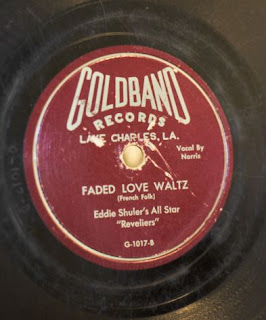
"Faded Love Waltz" - Eddie Shuler

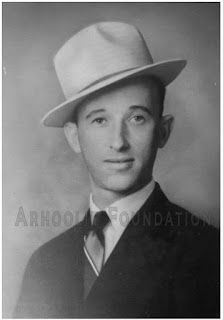
Eddie Shuler spent much of the 1940s filling in western swing groups and Cajun string bands such as the Hackberry Ramblers.   By the end of WWII, he managed to assemble his own group called the Reveliers and decided a new record label was needed in order to promote his new group.  In doing so, he couldn't ignore the sudden increased demand for Cajun music.  Eddie was surrounded by Cajun people who wanted more of those records.   His band had to adapt to the music demand. He recalls:
Oh yes, I sold a lot of records to the jukebox operators; that was where you sold most of your records in those days.  There were not all that many record shops, and then the people didn't have all that much money to buy records, except the richer people.  That's where you sold most of those pop records.  But the jukebox operators had to have what they called race records and hillbilly records; they had to have that stuff and the Cajun records, too.  So we got into the Cajun thing.1

Oh, chère, mais, j'ai prié, mais, pour t'avoir,
J'ai pas vu,  joli 'tite monde, comment je vas faire.

Oh, chère, mais, quel espoir, mais, que tu connais,
Moi de mourir de plus t'avoir, joli 'tit monde.

Oh, chère, mais, pourquoi-donc, mais, (.........),
Tu vas voir que je mérite pas tout ça tu m'fais.


Liberty Vindicator
Dec 11, 1947

Shuler wanted to record his own songs and focus more on hillbilly music, like his main influence, Bob Wills. He explained:
Any country band was hillbilly. It didn't make no difference who you were, you were hillbillies. There wasn't no country music then. They hadn't even invented the word.2  

Between 1944 and 1945, Shuler cut the first record for the Reveliers, featuring Shuler's compositions "Broken Love" and "Room in Your Heart For Me Darling."   By 1946, Cajun music was ramping up among the population of south Louisiana and he brought in Norris Savoy to assist in singing some classic Cajun songs.  Along with Pee Wee Lyons on steel guitar and Johnny Babb on bass, they recorded the melody of the 1936 "Ma Valse Favori" by Cleoma Breaux in which he entitled it "Faded Love Waltz" (#1017).  The melody is the same as Lawrence Walker's 1929 recording of "La Vie Malheureuse" and Happy Fats' 1935 recording of "La Valse De L'Amour". Shuler called his new record label Goldband Records. 
It had something to do with my mentality. I said, 'This is going to be a goldmine, so I'll just call it Goldband.'2  


Oh, dear, well, I prayed, well, to have you,
I couldn't see, pretty little everything, how I'll do this.

Oh, dear, well, what hope, well, that you know,
I'm dying to have you anymore, pretty little everything.

Oh, dear, well, so why, well, (........),
You'll see that I don't deserve all that you've done. 


  1. Record Makers and Breakers: Voices of the Independent Rock 'n' Roll Pioneers By John Broven
  2. http://theind.com/article-168-the-record-man.html
  3. Lyrics by Stephane F
Release Info:
Hey Cushmall | Goldband G-1017-A
Faded Love Waltz | Goldband G-1017-B

Find:
Eddie Shuler & His All Star Reveliers: Grande Mamou (BACM, 2016)

Monday, January 31, 2022

"Cow Island Special" - Cliff Lemaire

A native of Cow Island, George Clifford "Cliff" Lemaire led a group during the late 1940s, playing Cajun music in the western swing style.  By 1950, he assembled a backup band called "The Swingsters" made up of local musicians from New Iberia.  Cliff and the Romeros arranged a shuffle-style tune called "Cow Island Special" (#104).  Cow Island (also known as Ile des Vacheis a small community in Vermilion Parish that got it's name from a hill in the midst of a marsh where herds of wild cattle roamed.2  

Musician Harold Romero Sr. learned at a young age to make fiddles and by the time he was a teenager, he was learning to build and repair guitars and mandolins. Harold recalled the early years,
We were pretty popular, I guess.  There was a demand for string bands.  I remember the first Saturday night we played we got $20 a piece—that was a lot of money back then.3  

Toutes mes chères catins,
Quoi faire tu brailles tout les temps?
...
...

J’ai fait des nuits ennuyant,
Et c’est toujours la cause,
De jouer l’accordéon,
Là-bas à Chez Ménard's.

Quand j’étais garçon,
C’est la, j’ai passé mon temps,
Et courtiser,
J’attend l’accordéon.

Asteure, j’sus marié,
Mais, ina une dizaine,
Que j’ai la moyère coullion,
Mais, ma vielle dit,
“J’vas t’aimer tout les temps”.

Et c’est toujours la cause,
Eh, des nuits ennuyant,
Jouer l’accordeon,
Là-bas à Chez Ménard's.

Quand j’étais garçon, 
C’est la, j’ai passé mon temps,
Et courtiser,
J’attend l’accordéon.

Asteure, j’sus marié,
Mais, ina une dizaine,
Que j’ai la moyère coullion,
Mais, ma vielle dit,
“J’vas t’aimer tout les temps”.

J’ai fait des nuits ennuyant,
Et c’est toujours la cause,
De jouer l’accordéon,
Là-bas à Chez Ménard's.

Quand j’étais garçon,
C’est la, j’ai passé,
Et courtiser,
Et aimer les filles.


Cliff Lemaire

Hot Rod record producer Virgil Bozman brought the group to the Harold Romero's Music Shop in downtown New Iberia and recorded a song entitled "Cow Island Hop".  It was an ode to the Cliff's hometown and the small club known as Menard's.  Located between HWY 82 and the Forked Island bridge, the small dance-hall was just south of the more well known Rock-A-Bye Club.  

"The Swingsters" comprised of Harold Romero Sr. on fiddle, Johnny Romero on drums, and Louis "Bee" Romero on bass.   Cliff owned a nightclub in Kaplan, owned an amusement company, became good friends with George Jones, and according to musicologist and author Lyle Ferbrache,
At one time, he played at the Louisiana Hayride and was on the bill the night Elvis changed the course of country music.1  
Cliff recorded for Khoury's of Lake Charles in the mid 1950s but left the music business soon after for a career in auto sales.


All my dearest dolls,
Why do you cry all the time,
...
...

I have lonely nights,
And it's always the reason,
To play the accordion,
Down there at Chez Menard's

When I was a boy,
It's there, I passed my time,
And courted,
Waiting for an accordion.

Right now, I'm married,
Well, it's been 10 years,
Since I've had foolish ways,
But, my old lady says,
"I'm going to love you forever."

And it's always the reason,
On these lonely nights,
To play the accordion,
Down there at Chez Menard's.

When I was a boy,
It's there, I passed my time,
And courted,
Waiting for an accordion.

Right now, I'm married,
Well, it's been 10 years,
Since I've had foolish ways,
But, my old lady says,
"I'm going to love you forever."

I have lonely nights,
And it's always the reason,
To play the accordion,
Down there at Chez Menard's

When I was a boy,
It's there, I passed by,
And courted,
And loved the girls.


Harold Romero

While running their music store during the day, the three Romero brothers later created their own group called the "Teche Playboys" which played everything from country music to rock n roll.  They played at places such as the Showboat Club in New Iberia an the Lafitte Club in Abbeville.3   Bee Romero would continue on throughout the 50s playing rockabilly music with his band called the Down Beats. 


  1. Discussions with Lyle F
  2. http://files.usgwarchives.net/la/vermilion/history/cowisl.txt
  3. The Daily Advertiser (Lafayette, Louisiana) 20 Mar 1996
  4. Lyrics by Smith S

Release Info:
Rou Li Aie | Hot Rod 104
Cow Island Special | Hot Rod 104

Saturday, January 15, 2022

"New Orleans Waltz" - Nathan Abshire

One of the most colorful and greatest Cajun musicians of all time was the late Nathan Abshire. Abshire’s unique style—best heard on the likes of “Pine Grove Blues,” “Mama Rosin,” “Shamrock Waltz,” and even Joe South’s “Games People Play”—came from blending traditional Cajun music with Louisiana Creole and blues music, music other early Cajun musicians largely disdained or ignored. He also ignited his performances with a spirit and joy for life that few musicians could match.


Ah, 'tite fille, moi j'm'en vas, chère,
Moi j'm'en vas, m'en aller dans la maison.

Ah, 'tite fille, tu vas voir, chère,
Tu vas voir ton erreur, ça va tout le temps.

Ah, 'tite monde, c'est malheureux, chère,
Malheureux de te voir t'es, là.

Ah, 'tite fille, t'écoutais, chère, 
T'écoutais tous les conseils de tous les autres.


Nathan Abshire
The 1949 tune is an ode to the Crescent City called "New Orleans Waltz" (#110).  A melody popularized in the 1930s by Norris Savoy, Norris recorded the same melody in 1947 as "La Valse de Meche".    Nathan and Norris recorded briefly with Warnes Schexnayder and Happy Fats at a New Orleans recording session in 1935.  It's fitting that Nathan chose this title instead, reminiscing about his days playing music with the group in the Big Easy. 

The band consisted of Nathan on accordion and vocals, Will Kegley on fiddle, Atlas Fruge on steel guitar, Ernest Thibodeaux on guitar, Jim Baker on bass, and Ozide Kegley on drums. Recorded for Virgil Bozman's OT Records, supported by George Khoury, he would record some of his earliest post-war material for this label.  It didn't take long for Khoury to see Nathan's potential and sign him on his own label, Khoury's Recordings.  Eddie Shuler recalls Bozman:
He sold cow horns.  In fact, I still have one of his cow horns over the entrance to my door there that he gave me back at that time. I let him sing on my radio show. Anyway, he went then and teamed up with George Khoury and then he went out and found Nathan Abshire.  They used the radio station's disc cutting facilities because that's the way they made their commercials.2


Oh, little girl, I'm leaving, dearie,
I'm leaving, I'm going home.

Oh, little girl, you will see, dearie,
You will see your mistake, always how it is.

Oh, my little everything, it's terrible, dearie,
Sad to see how you are, over there.

Oh, little girl, listen, dearie,
Listen to all the advice of others.


Masters were cut onto aluminum-based acetate-covered discs, which were then sent to a processing plant.  Many of the metal plating work for Virgil's records were done by the Charles Eckart Co. on Santa Monica Blvd in Los Angeles.  This firm in turn probably sent the metal parts to a Los Angeles pressing plant to manufacture the discs, since there were no such plants in Louisiana.3  

Eventually, Nathan re-recorded the melody as "La Valse De Meche" in 1973 for La Louisianne Records with Bessyl Duhon on rhythm guitar, Rufus Thibodeaux on bass, Joe Thibodeaux on drums, record producer Carol Rachou on triangle, and Merlin Fontenot on fiddle.

Towards the end of his days, Abshire adopted the motto “The good times are killing me.” It was the title of his last Swallow LP and he had it spelled out in gold mail box letters on his accordion case. 


  1. http://www.offbeat.com/articles/masters-of-louisiana-music-nathan-abshire/
  2. http://arhoolie.org/eddie-shuler-goldband-records/
  3. Cajun Honk Tonk Vol.2.  Liner notes.  
  4. Lyrics by Stephane F


Release Info:
New Orleans Waltz | OT Records 110-A
French Blues | OT Records 110-B

Find:
Cajun Music - The Early 50s (Arhoolie, 1969)
Bayou Two-Step - Cajun Hits From Louisiana 1929-1962 (Jasmine, 2015)

Sunday, January 2, 2022

A New Year And Retrospective Thoughts

Can you believe it's been 8 years since the blog began?  A project, one that was started to collectively place the obscure history of this beautiful music in one place, has grown immensely.  It moved from a personal repository of songs, lyrics and history to a website that people around the world have contributed to and helped inspire.  It has allowed musical families to share their history with others, allowed me to meet some wonderful people along the way, and acquire long lost information about some of the most crucial components in our culture's history.  This site has helped fill in the gaps and provide a more complete picture of how the music started and evolved. 

Continuing on into 2022, the density and frequency of the articles will change, however, the energy and passion about early Cajun music remains. This blog project has spawned future ideas for other projects, some too amazing to ignore. As we sit back and pour through everything, hopefully soon, more interactive things come about.  

The biggest hope is that it has helped others continue their research journey by chasing after the source material that has driven much of this, and encouraged others to get immersed into the early Cajun music history like never before.   There's plenty more songs to cover and you are encouraged to pick up where this blog leaves off by reading through some of the great sources provided in each article. 

After 8 years, I'm pleasantly surprised in the overall interest I've received and excited so many that have reached out to help guide the project.  If you have anything to contribute, as always, feel free.  Bonne année et allons écouter!

Tuesday, December 28, 2021

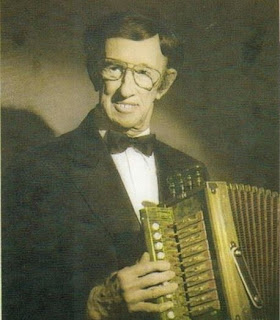
The Rise And Fall … And Redemption of Cajun Musician Moise Robin

In the 1920s, some of the most talented accordion players to rise among the ranks of Cajun musicians were born and raised along the Bayou Teche.   Artists such as the Segura Brothers, Didier Hebert, Columbus “Boy” Fruge, the Guidry Brothers, Artelus Mistric, Berthmost Montet and Joswell Dupuis were some of the lucky few to score recording contracts with major recording labels.   But none of them had become as infamous and garnered such wild notoriety in later years as Arnaudville-native Moise Robin.   His life and early success was followed by self-inflicted tragedy and regret that affected not only his family, but the whole community.  

Joseph Moise Robin was born January 4th, 1911 in Point Claire, a small community between Leonville, Louisiana and Arnaudville, Louisiana.  His father, Joseph, was a talented accordion player in his own right.  “He played all over, around the territory Ville Platte and everywhere, play dances, for many years”, Robin told Chris Stratchwitz in 1980. “My daddy was born in 1886 … And he started play when he was young.”  Moise began borrowing his father’s accordion and by the age of nine, he was assisting him at dances.  “He would make me play a few dances for the people that took those great, big, red accordions, old time, and just my head would show up on top of the accordion.”  Moise struggled to keep up and his vocals could never attain the sound that he desired.  “I didn't have a good voice,” recalled Robin.  “It was too low and I never had a good voice up to this day. One of my friends advised me to drink raw eggs and that would cause me to have a beautiful voice.  So, I started watching the chicken house and looking for eggs.”


THE RISE

By his late teens, Robin had a chance to make it big.  In 1929, Ville Platte fiddler Leo Soileau lost his accordion playing partner Mayuse Lafleur in a brawl outside a bar room.   By the time Leo was ready to resume his professional career, he contacted Moise.  “He heard about me”, said Robin. “So he came home with my daddy and seen me that’s when he got me to play with him.  So, I replaced [Lafleur].  And the first place we went, we played all around in clubs.”    Paramount Records heard that scouts for RCA and Columbia were scoring big regional hits with Cajun musicians and their executives wanted a piece of the action.  By July, they were in contractual discussions with Opelousas sewing machine seller and record dealer, Winter Lemoine.  
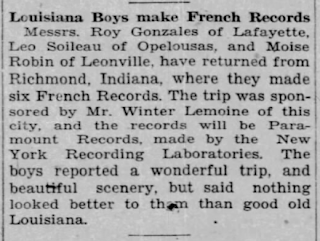
Lemoine was a native of Leonville and a distributor for Paramount records in the region.  Along with Leo’s history of recording, Lemoine arranged the duo to travel to the Starr Piano Company Building in Whitewater Gorge Park in Richmond, Indiana where the Gennett Recording company had constructed a studio.  “So we met in Richmond, Indiana and made two records there,” recalled Robin.  “It was all steam trains …They would pay all expenses, and the year was, in that time, money, it was Depression, $25 each, to make that first record. And it was great for us to $25.”
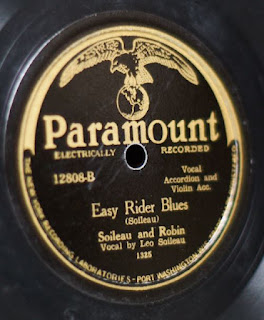

The duo recorded six sides for the label and the future was looking good for the young Robin.   Soon after, RCA contacted Leo in September for another session, however, this time, Robin tagged along.  “We was called to Memphis, Tennessee, me and Leo, and made again two records there.”  RCA record scout Ralph Peer was in charge and had previously worked with Opelousas merchant and agent for Leo named Frank Deitlein.  Frank had paid for the duo’s travel and brought along Columbus “Boy” Fruge.  “In the grand ballroom in the Claridge Hotel, where the Victor company did their recording, the four of us entered and were greeted by a fellow by the name of Ralph Peer,” recalled Frank. “I believe that he was president of the Southern Music Publishing Co., which specialized in recording Southern folk songs.”  Leo and Moise recorded four songs followed by Columbus who recorded another four tunes.  


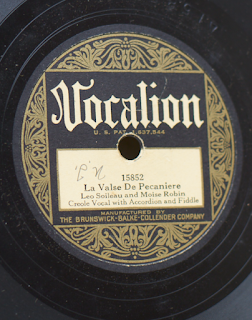
The sessions made huge impacts on southern record scouts causing executives at Brunswick Recording Company to take note.  Richard Voynow, orchestra director and Vocalion recording scout, traveled down to the Evangeline countryside and found several area musicians interested in a local recording session.  Voynow lined up Leo and Moise, along with Dennis McGee, Ernest Fruge, Douglas Bellard, Kirby Riley, and the Guidry Brothers.  Each musician was sponsored by a local area Vocalion record dealer.  “We was called to New Orleans, Louisiana, at the Roosevelt Hotel and we made again two records,” said Robin. 

Moise’s career had reached a pinnacle point.  However, dark times loomed ahead.  He and Leo’s professional relationship was starting to sour, and their personalities were showing signs of conflict.  Both men seemed to disagree on each other’s technique and the New Orleans session would be Robin’s  last.  When folklorist Ralph Rinzler asked Robin why they split, he explained their performances were suffering. “It's the same D, G, C,” exclaimed Robin.  “There's no chorus in that son of a gun (Cajun music)... accordion and fiddle, it's just you got to pap.  You just can't stop.”  Their split wasn’t the only reason the recording opportunities ceased.  The end of 1929 signaled the Great Depression and all southern scouts declined to record Cajun music for another five years. 

Throughout the mid-1930s, Leo would continue recording and playing in regional dancehalls throughout the southwestern part of the state, recording for other labels such as Bluebird and Decca, while Robin found himself content playing music in small bars around Arnaudville. These bars rarely were places hosting grand cosmopolitan events.  They catered to rural folks, generally farmers, that were looking for an escape from the daily grind.  With the economic effects still lingering from the Depression, alcohol consumption increased, and with it, the pension for violence in bars did too. On July 24th, 1937, while playing late night at Forest Dupuis’ Dance Hall outside of Leonville, five men approached Robin and attacked him with knives.   When officers arrived, Robin was found slashed across his abdomen and he remained in critical condition at his home.  All five assailants were arrested however, Robin’s problems were only beginning.


THE FALL

Moise’s rough and tumble livelihood spilled out into his relationship with his wife Louise.  The couple married in 1934 at the Leonville church and had a daughter Erilda soon afterwards. But their relationship was never stable.   In 1949, everything came crashing down.  Late at night on September 12th, 1949, Louise and Moise had gotten into another dispute.  They had been quarrelling over a week, however, this time, Louise wasn’t interested in arguing anymore.  She made it clear that she was leaving him.  To top it off, she threatened to take custody of both of their daughters.  Angry, Moise threatened her life if she ever left him but she had already made up her mind.  Louise packed her things, grabbed their two daughters, fled their house in Leonville and headed to her father Ovide Richard’s house in Paccaniere.   

In a fit of rage, Moise jumped into his car and headed to her father Ovide’s home.   Not to alarm the family of his presence, he parked his car a considerable distance from the Richard home, walked through the fields and entered the home from the back door.  Quietly, he walked into the house, hoping to not alarm the other family members. 

Louise, who was busy talking to her father, noticed Robin enter the adjacent room.  Immediately, she screamed and ran toward her father.  Suddenly, Robin revealed a 12-gauge sawed-off shotgun, loaded with buckshot.  He fired directly at her face and after she fell to the ground, he vengefully fired a second shot into her back.   According to Robin's daughter Erilda, “I did not see [Moise] come in but I saw him when he was at the door and when he shot. Then I ran to the bathroom and then into the front room where my mother was.”  Louise’s mother lay on the ground, cradling her daughter’s head.  

Several pellets from the shot missed his intended target and lodged in Ovide’s foot.  Knowing that Moise had used all the shells in his gun, Ovide tried to prevent Moise’s escape.  Ovide explained during the hearing, “I jumped over my daughter and ran in the back room, the same room that Moise had shot from.  I grabbed my shot gun and went after him but he had gone out in the dark and I did not see him after that.”  

Robin fled the scene.  He arrived at his sister Alfreda’s house where he explained to her that he killed his wife and was going to kill himself.   Robin's nephew, after hearing the news, jumped in a car, attempting to chase him.  Robin left Alfreda's home and ended up finding a pistol at his father's house.  Before anyone could stop him, Robin fired a round into his own head and another one that entered the left side of his face.  Amazingly, Robin survived.  He was taken to the Arnaudville sanitarium, surrounded by security guards.  

The shock from the event rippled across Cajun communities.  Newspapers across the state were suddenly covering the case and all the gruesome details.  The coroner labeled her death from “shock and hemorrhage from a gunshot would into the abdomen and liver inflicted by Moise Robin.”   He stayed in an Opelousas hospital until he could recover enough to be moved to the St. Landry parish jail at Opelousas. Later that month, a grand jury was formed where they indicted him on murder charges for the slaying of his wife.  They transported him to Angola State Penitentiary where he awaited the results of the investigations. 

In October, he began another attempt to kill himself.  For nine days, he went on a starvation diet.  He eventually regained his awareness after being admitted to the prison hospital where they injected fluids and nourishment.  Superintendent Lawrence believed he had “somewhat improved but remained in pretty bad shape.”  In November, a panel of specialists were assigned to judge Robin’s mental condition in order to determine if he was fit to stand trial.  Although Angola physicians believed he was improving physically, they claimed “he is so mentally confused and incompetent that he is unable to care for himself, has to be fed, bathed, and have his bodily needs attended to”.  They also claimed, in the presence of witnesses and a Catholic priest, Robin said he had “just seen the Blessed Virgin and spoken to her” and that “he would perform miracles” before he died.  His attorneys contended that such delusions and irrational statements question Robin’s sanity. 
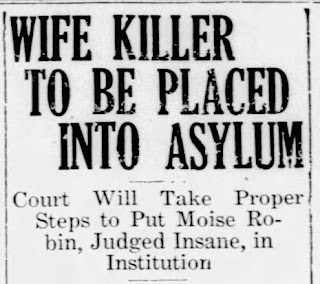
By December, the judgement arrived from Judge Lessley Gardiner.   Moise Robin was declared “insane, incapable of understanding proceedings against him or of entering into his own defense” by Dr. Magruder and Dr. Robards.   Robin was transferred from Angola to the East Louisiana State Hospital’s criminal insane department in Jackson in early January of 1950.

He remained at the sanitarium as a mental patient for 17 years until October of 1966.  He decided to plead guilty to the charge of manslaughter in order to receive a five-year suspended sentence.  The medical staff notified the district attorney that Robin was “capable of taking part in his own defense”.  He was returned to the St. Landry Parish jail where he awaited his fate.   Judge Gardiner placed Robin on five-year active supervised probation by a psychiatrist. 


THE REDEMPTION

By 1968, Robin believed he was a changed man.  Like many ex-convicts, Robin was convinced that he was in the midst of a "religious awakening".  The time he spent in confinement would be used to redeem himself and move into a more familiar lifestyle.  He met Marie Artigue, a companion that he remained with, although they never married.  Robin even considered performing music again.  He formed a small group called the Opelousas Playboys, playing at small venues such as Richard’s Casino in Lewisburg.  Both record producers, J.D. Miller and Eddie Shuler, took chances and recorded Robin in their respective studios, releasing several singles on 45 RPM records.  

By 1983, the guilt of his offenses began to weigh on him and he spent time writing religious laments claiming, “he was led by a spirit" to write a book by the name of ‘The Golden Gate’.  In it, he attempts to redeem himself in the eyes of the public and loosely writes about premonitions and future predictions, all with a spiritual flare. He took out ads in the paper to sell his book, making exorbitant claims, hoping his public perception about him would change. 
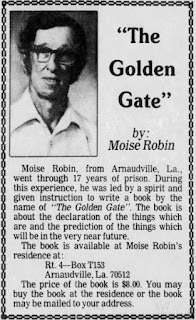
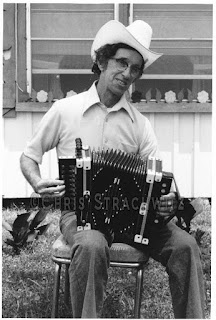
In the end, he would freely admit his falling from grace.  He told others in documentaries, such as Gerard Dole, Chris Strachwitz and Marc Savoy, of the things that had happened, although, after much time had passed, details were missing from his recollection.  He performed for the 1984 Festival Acadian with his Arnaudville Playboys and continued selling his book in small shops.  He often teamed up with Doc Guidry and Faren Serrette, playing at places such as Pat’s Waterfront Restaurant, Eunice’s Liberty Theater and area festivals.  Gerard Dole recorded Robin playing one last time in 1989 for his CD release of “Le Légendaire Moise Robin”.  It seems Robin never used his music to hide from his time during incarceration and thought others should take note of his spiritual prophecies.   According to Robin, 

“And why should we believe a prisoner?  Let me remind you that the 'Old Man' has always and always will choose a prisoner to do his spiritual work.”


  1. https://arhoolie.org/moise-robin/
  2. Clarion-News (Opelousas, Louisiana) 15 Sep 1949
  3. Clarion-News (Opelousas, Louisiana) 22 Sep 1949
  4. Clarion-News (Opelousas, Louisiana) 24 Nov 1949
  5. Daily World (Opelousas, Louisiana) 20 Dec 1949
  6. Daily World (Opelousas, Louisiana) 16 Oct 1966
  7. The Daily Advertiser (Lafayette, Louisiana) 06 Nov 1983
  8. Daily World (Opelousas, Louisiana) 26 Feb 1984

Tuesday, December 7, 2021

"Prison Two Step" - Austin Pitre

Born in Ville Platte, Louisiana, Austin Pitre, he was surrounded by house parties and the emerging dance-hall scene.  All of the area's musicians had a profound influence on Austin's sound, just as his life of hard work added a unique rough edge to his style.  Austin's fiddle-playing father gave him an accordion in hopes that his six-year-old son would learn to accompany him at the local house dances.1  


"Prison Two Step" (#500) was Pitre's version of Amede Ardoin's "Les Blues De La Prison", originally recorded in 1934.   Austin was known to have several of Ardoin's original 78 RPM records and there's little doubt he learned the song from endless days of listening to them.  His group between 1954 and 1956 is possibly Cliff Fontenot on fiddle, Floyd Fontenot and Pee Wee McCoullough on guitar.  The session, recorded in Crowley, would be his last one with J.D. Miller.   From that point on, he would work almost exclusively with a new up-and-coming local record giant, Floyd Soileau. 

In 1956, Dr. Harry Oster recorded Austin again during a field session, this time calling the tune "Prison Song".  Later in life, Austin was invited to travel and play for the Library of Congress in 1973.   Guitarist Preston Manuel recalled,
A group I played with a long time ago was Austin Pitre.  Yes, we played many dances--me, and Austin, his son, Jimmy, [James Williams] "J.W." Pelsia, the steel player, and Roy Tate. We went to Washington, D.C. for nine days. We played in Arlington, Virginia, for that big fair.2  


  1. Austin Pitre "Opelousas Waltz".  Liner notes.
  2. Ye Yaille Chere by Raymond Francois


Release Info:
Prison Two Step | French Hits F-500
La Valse De Chagrin | French Hits F-500

Find:
Louisiana Cajun Music Volume 4: From The 30s To The 50s (Old Timey, 1972)
Acadian All Star Special - The Pioneering Cajun Recordings Of J.D. Miller (Bear, 2011)